Home Health Technology Stack: Essential Tools for 2026
Build a home health technology stack for 2026: EMR, AI documentation, coding, OASIS and visit-note QA, referral intake, messaging, and analytics.
Lime Health Team
Lime Health AI
Updated October 2026: this guide now covers the AI scribes embedded in WellSky and HCHB, MatrixCare’s sale to Frazier Healthcare Partners, Mosai (the merged Forcura and Medalogix), visit-note QA and referral intake layers, and OASIS-E2. We removed a documentation-time figure and a vendor we could not verify.
What Is a Home Health Technology Stack?
A technology stack is the set of software tools your agency runs on. For home health agencies, this usually includes an EMR, documentation tools, coding, QA, communication platforms, referral intake, and analytics. The right stack reduces clinician burden, improves compliance, and supports growth. The wrong stack creates friction, redundancy, and frustration.
In 2026, the stack is shifting again. Most major EMRs now embed some form of AI documentation, OASIS-E2 has been in effect since April 1, 2026, and AI tools now cover work EMRs were never built for: QA on every note, coding review, and referral intake.
The Core Stack: What Every Agency Needs
1. EMR / EHR System (Foundation)
Your EMR is the operational backbone. Scheduling, patient records, billing, and CMS submissions all flow through it.
Top options: WellSky, HCHB, Axxess, MatrixCare, DSL
What changed: WellSky announced WellSky Scribe, ambient listening delivering notes into the EHR, in October 2025. HCHB announced Curate: Scribe, built with StenoHealth, in March 2026. ResMed sold MatrixCare to Frazier Healthcare Partners in September 2026, so ask MatrixCare how its roadmap and support change under the new owner.
Selection criteria: Agency size, service lines (home health only vs. multi-setting), budget, and available trained staff. See Best Home Health Software & EMR Systems for detailed comparisons.
2. AI Clinical Documentation (High Impact)
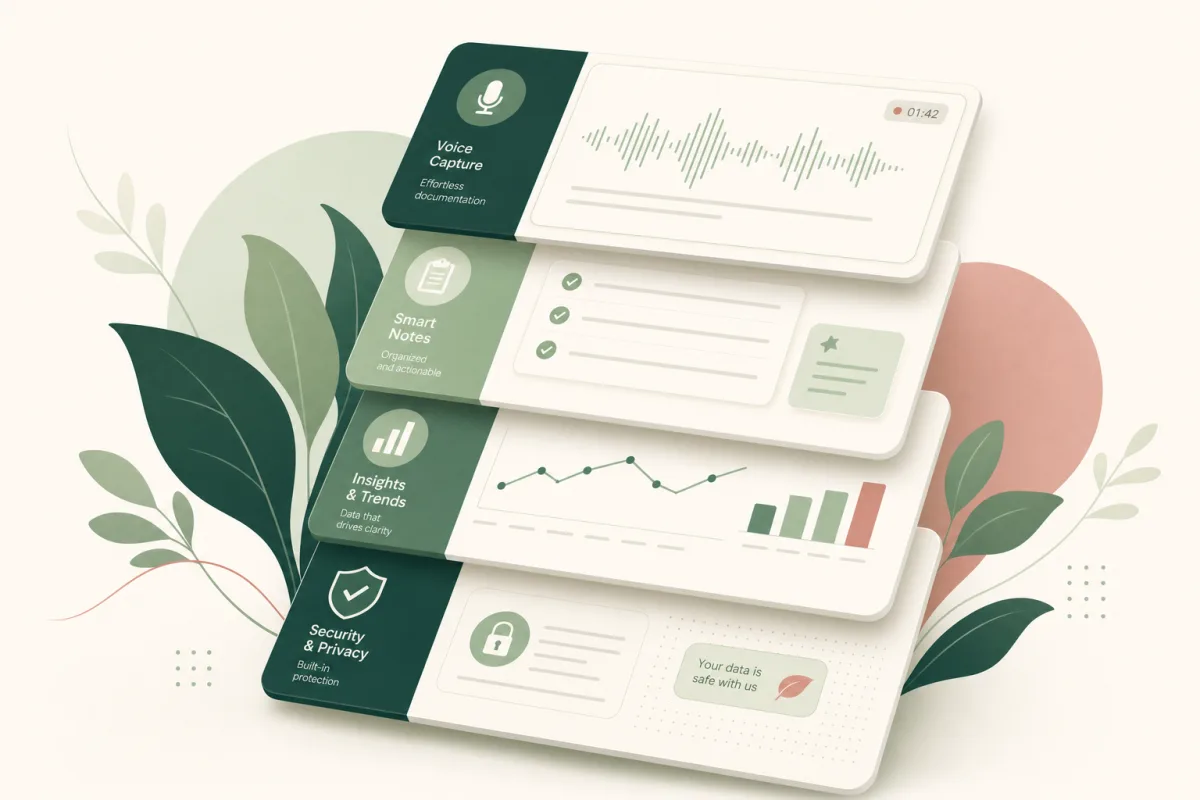
For most agencies, AI documentation is the highest-ROI addition. AI documentation cuts after-hours charting by drafting visit notes and OASIS responses from the visit conversation. The clinician reviews and confirms each draft.
Why it matters:
- Lime reports a 75% reduction in documentation time with OASIS Scribe
- Drafting during the visit avoids the accuracy problems of delayed, memory-based charting
- Targets after-hours charting, a major driver of clinician burnout and turnover
- Drafts follow a consistent structure for compliance review
Your options: The embedded EMR scribes draft notes inside their own platforms. A specialist platform like Lime Health AI goes further for home health: OASIS-E2 drafts, ICD-10 coding suggestions, and OASIS review, working alongside your EMR through EMR integrations.
See AI vs. Manual Charting and AI vs. EMR-Only Workflows for detailed comparisons.
3. Coding Solution (Essential)
Accurate ICD-10 coding drives PDGM payment. The principal diagnosis on the claim sets the clinical group, and secondary diagnoses set the comorbidity adjustment. Every agency needs a coding approach. The question is which one.
Options:
- AI-assisted coding: AI suggests codes from the documentation, your coders confirm, scales without adding staff
- Outsourced coding: Outside expertise, turnaround in hours to days, per-chart cost
- In-house coders: Maximum control, highest staffing investment
Most agencies benefit from AI suggestions as a first pass with coder review. See AI vs. Outsourced Coding and home health coding services for trade-offs.
4. HIPAA-Compliant Communication (Required)
Field clinicians need secure messaging for patient information. Standard SMS is a compliance violation waiting to happen.
Options: TigerConnect, Doximity (for physician communication)
Minimum requirement: Encrypted messaging with message expiration and audit logging.
The Advanced Stack: Competitive Advantage
5. OASIS QA (Strongly Recommended)
OASIS accuracy directly affects payment and audit risk. The PDGM functional level comes from M1800-M1860 plus M1033, so errors on those items change payment. Real-time AI QA flags errors before submission, not weeks later. See Best OASIS Assessment Tools.
6. Visit-Note QA (Strongly Recommended)
Manual QA teams review a sample of charts. Automated QA like Sentinel QA reviews every submitted visit note against your agency’s rules, and your QA team supervises the findings and handles exceptions.
7. Referral Intake (Growth-Focused)
Referrals arrive through hospital portals such as CarePort (WellSky), fax, and email. Faster, consistent responses win more admissions from the referral flow you already receive. Options include Lime Intake, which reads referrals and applies your admission criteria, Mosai’s referral and admissions tools, and CarePort’s own intake products.
8. Analytics and Benchmarking (Recommended for Growth)
Analytics platforms track quality measures, benchmark against peers, and point to operational improvements.
Options: SHP, Mosai, built-in EMR analytics
9. Predictive Analytics (Advanced)
Machine learning models predicting hospitalization risk and guiding visit utilization under PDGM. Mosai’s Pulse, from the former Medalogix, provides visit-level risk scoring and utilization alerts. Most valuable for larger agencies where visit allocation carries significant financial impact.
Stack Architecture: How the Pieces Fit
┌─────────────────────────────────────────────┐
│              Analytics Layer                │
│      (SHP, Mosai, EMR Reporting)            │
├─────────────────────────────────────────────┤
│        AI Documentation and QA Layer        │
│  ┌─────────┬─────────┬─────────┬─────────┐  │
│  │ AI      │ ICD-10  │ OASIS   │ Visit-  │  │
│  │ Scribe  │ Coding  │ QA      │ note QA │  │
│  └─────────┴─────────┴─────────┴─────────┘  │
│              (Lime Health AI)               │
├─────────────────────────────────────────────┤
│                 EMR Layer                   │
│  Scheduling │ Billing │ Records │ Compliance│
│   (WellSky, HCHB, Axxess, MatrixCare, DSL)  │
├─────────────────────────────────────────────┤
│        Intake and Communication Layer       │
│  Referral Intake │ Secure Messaging │ Fax   │
└─────────────────────────────────────────────┘
The EMR runs operations. The AI layer handles documentation quality and QA. Analytics monitors everything. Intake and communication connect the agency to referral sources, physicians, and the care team.
Common Stack Mistakes
Mistake 1: Expecting your EMR to do everything. EMRs manage data and workflows. Some now embed AI scribes, but those draft notes inside one platform. If your EMR is your only tool, OASIS QA, coding review, and visit-note QA still fall on your staff.
Mistake 2: Adding tools without a clean connection to your EMR. Every tool working outside your EMR without a clear handoff creates a parallel workflow. Clinicians working in two disconnected systems lose the efficiency the new tool promised. Prioritize tools either integrating with your EMR or working through access your team already has.
Mistake 3: Buying analytics without fixing inputs. Analytics dashboards built on inaccurate OASIS data or incomplete documentation tell you nothing useful. Fix documentation quality first, then invest in analytics.
Mistake 4: Ignoring the clinician experience. Every tool in your stack affects field clinicians. The best technology reduces their burden. The worst adds steps to their workflow. Evaluate every tool from the clinician’s perspective.
Building Your Stack: A Practical Sequence
If you are building or upgrading your technology stack, here is a practical implementation sequence:
- Start with your EMR, get operations stable
- Add AI documentation, biggest impact on clinician time and documentation quality
- Integrate coding, improve payment accuracy (often bundled with AI documentation)
- Implement OASIS and visit-note QA, protect against audit risk
- Automate referral intake, respond faster to the referrals you already receive
- Add analytics, once your data inputs are accurate, analytics become actionable
- Layer in advanced tools, predictive analytics as your agency grows
Technology Stack Resources
- Best Home Health Software & EMR Systems, Compare EMRs and embedded AI
- Best AI Tools for Healthcare Documentation, AI documentation platform comparison
- Best Care Coordination Tools, Messaging, referral, and document tools
- EMR Integration Guide, How AI tools work with your existing EMR