Best Home Health Software & EMR Systems (2026 Comparison)
Home health software and EMR systems compared, updated October 2026. WellSky, HCHB, Axxess, MatrixCare, DSL, embedded AI scribes, and how to choose.
Lime Health Team
Lime Health AI
Updated October 2026: this guide now includes our EMR buyer criteria (agency size, service lines, staffing market, integrations, implementation time, contract terms), previously a separate article. The July 2026 update covered the embedded AI scribes the major EMRs shipped and the OASIS-E2 requirements in effect since April 1, 2026.
The best home health software in 2026: Lime Health AI for AI documentation, coding, and QA, WellSky for large agencies on an established EMR, HCHB for operational efficiency, Axxess for small-to-mid agencies, MatrixCare for multi-setting organizations, and DSL for hospice-focused agencies. Details and tradeoffs below.
| Platform | Best for | AI documentation |
|---|---|---|
| Lime Health AI | AI documentation + coding + QA | Ambient scribe: full OASIS-E2, notes, ICD-10 |
| WellSky | Large agencies, established EMR | WellSky Scribe (transcription, embedded) |
| HCHB | Operational efficiency | Curate: Scribe (draft notes, embedded) |
| Axxess | Small to mid-size agencies | Limited |
| MatrixCare | Multi-facility organizations | Limited |
| DSL | Hospice-focused agencies | Limited |
What to Look for in Home Health Software in 2026
Home health agencies depend on software for nearly every operational function, clinical documentation, scheduling, billing, compliance, and quality reporting. Choosing the right platform affects everything from clinician satisfaction to reimbursement accuracy under PDGM and the OASIS-E2 requirements in effect since April 1, 2026.
The best home health software in 2026 goes beyond basic EMR functionality. Agencies need tools to reduce documentation burden, support OASIS accuracy, simplify coding, and integrate across the clinical workflow. The biggest shift this year: nearly every major EMR now ships some form of embedded AI documentation, so the question is no longer “AI or no AI” but how deep the AI goes.
Here are the top platforms home health agencies should evaluate.
1. Lime Health AI, Best All-in-One AI Documentation Platform
Best for: Agencies wanting AI-powered documentation, coding, and QA in a single platform
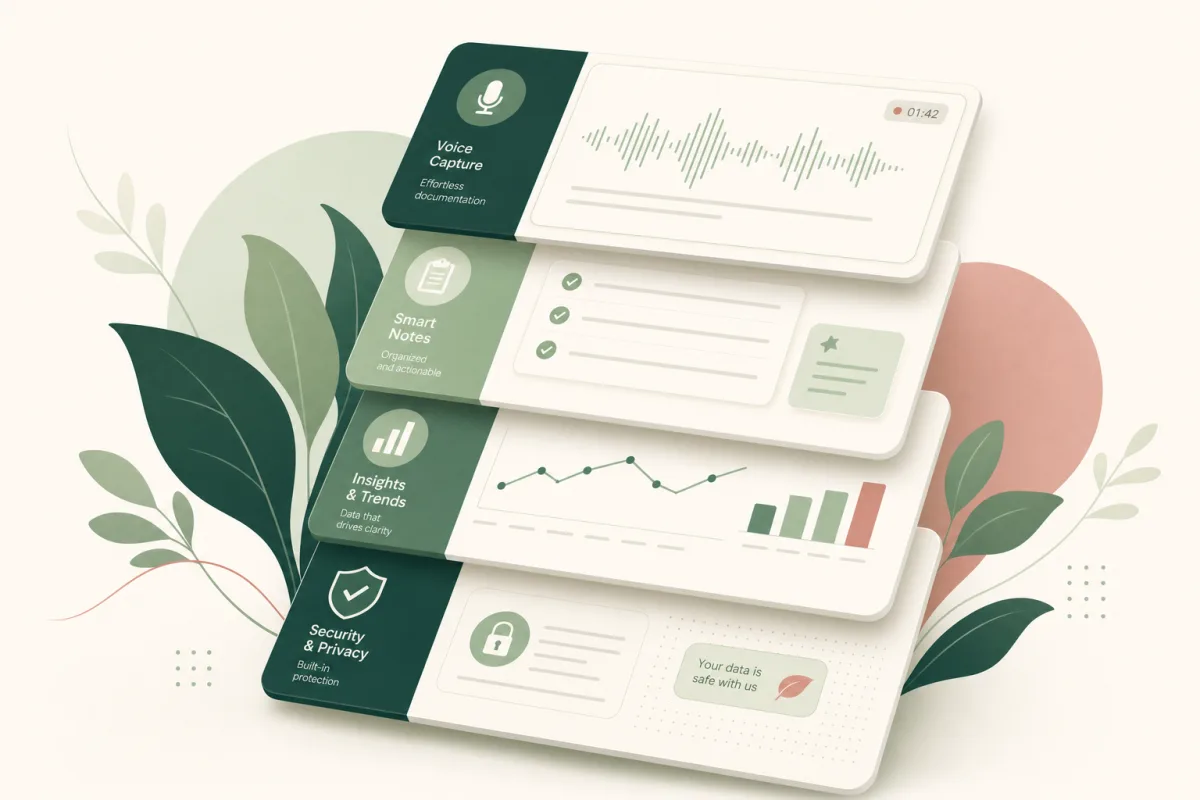
Lime Health AI is purpose-built for post-acute care, combining an ambient AI scribe, ICD-10 coding, OASIS/HOPE QA review, and admissions automation into one platform. Clinicians record visits using the mobile app, and the AI drafts compliant clinical notes, OASIS assessments, and coding suggestions for the clinician to review and confirm.
Key strengths:
- Ambient voice capture eliminates after-hours charting
- Built-in OASIS and HOPE assessment QA
- AI-powered ICD-10 code suggestions with clinical evidence
- Native integrations with WellSky, MatrixCare, Axxess, and DSL
- Virtual staffing option for agencies wanting trained staff alongside the AI
- Multi-language support including Spanish
Considerations:
- Focused exclusively on post-acute care, not designed for acute or outpatient settings
- Newer platform compared to legacy EMR vendors
Pricing: Per-chart pricing; contact for details
2. WellSky Personal Care / CarePort, Best Legacy EMR for Large Agencies
Best for: Large agencies needing a comprehensive, established EMR platform
WellSky (formerly Kinnser) is one of the most widely used home health EMR systems. It provides scheduling, clinical documentation, billing, and reporting in a mature platform with a large user base. In late 2025, WellSky added embedded AI to its Home Health EHR: WellSky Scribe (ambient listening and transcription populating EHR fields during the visit) and WILA, a voice assistant for completing OASIS items after the visit.
Key strengths:
- Comprehensive EMR with scheduling, billing, and clinical documentation
- WellSky Scribe now offers embedded ambient transcription within the EHR workflow
- Large user community and established training resources
- Strong reporting and analytics capabilities
Considerations:
- The AI is transcription-first: it extracts what was said aloud, and the clinician still reviews and completes the chart
- No human verification layer, AI output is checked by the same clinician who did the visit
- Only available inside WellSky, no help if you run mixed EMRs across lines of business
- Higher total cost of ownership for smaller agencies
Pricing: Varies by agency size; contact for quote
3. Homecare Homebase (HCHB), Best for Operational Efficiency
Best for: Mid-to-large agencies focused on scheduling optimization and field operations
HCHB is a cloud-based home health and hospice software platform focused on operational efficiency. Its strength is in scheduling optimization, real-time field visibility, and workflow management. In March 2026, HCHB announced Curate: Scribe, a native AI documentation feature built with StenoHealth. Curate: Scribe generates draft clinical notes inside the HCHB workflow.
Key strengths:
- Advanced scheduling and route optimization
- Curate: Scribe now drafts clinical notes natively in the EHR
- Real-time field staff tracking and communication
- Integrated billing and claims management
Considerations:
- Curate: Scribe is new (launched March 2026) and drafts notes, structured OASIS completion and coding remain the clinician’s job
- No human verification layer on AI output
- Complex to implement and customize
Pricing: Contact for enterprise pricing
4. Axxess, Best for Small to Mid-Size Agencies
Best for: Growing agencies needing an affordable, user-friendly EMR
Axxess offers a cloud-based home health, hospice, and home care platform designed for accessibility. Its interface is generally considered more intuitive than legacy systems, and its pricing model works for smaller agencies without enterprise budgets.
Key strengths:
- Clean, modern interface with lower learning curve
- Competitive pricing for smaller agencies
- Covers home health, hospice, and private duty
- API available for third-party integrations
Considerations:
- Less mature than WellSky or HCHB for large-scale operations
- Limited AI or ambient documentation features
- Reporting capabilities less robust than enterprise alternatives
Pricing: Per-user monthly pricing; contact for details
5. MatrixCare, Best for Multi-Facility Organizations
Best for: Organizations operating across multiple post-acute settings (home health, hospice, senior living)
MatrixCare provides an EHR platform spanning home health, hospice, and senior living. Its strength is in multi-facility organizations needing a unified platform across settings. ResMed sold MatrixCare to Frazier Healthcare Partners in September 2026, so ask how the roadmap and support model change under the new owner.
Key strengths:
- Unified platform across home health, hospice, and senior living
- Strong interoperability and data sharing across settings
- Predictive analytics for patient outcomes
- Established compliance and quality reporting tools
Considerations:
- Complex for home-health-only agencies
- Documentation is template-based without AI generation
- Implementation timelines run long
Pricing: Enterprise pricing; contact for quote
6. DSL (Delta Health Technologies), Best for Hospice-Focused Agencies
Best for: Hospice agencies and organizations with a strong hospice focus
DSL provides EHR software with particular strength in hospice workflows. Its platform handles hospice-specific requirements like benefit period tracking, recertification management, and IDG documentation.
Key strengths:
- Deep hospice workflow support
- Benefit period tracking and recertification tools
- IDG meeting documentation
- Integrated billing for hospice claims
Considerations:
- Smaller user base than WellSky or HCHB
- Limited AI or automation capabilities
- Home health features less comprehensive than hospice-specific tools
Pricing: Contact for pricing
EMR Selection Factors
Features matter less than fit. Weigh these before you sign:
| Factor | Why It Matters |
|---|---|
| Agency size | Some platforms are priced and designed for large agencies, others serve small agencies better |
| Service lines | If you run hospice and home health, you need a platform handling both well |
| Staffing market | A widely used EMR makes it easier to hire staff who already know the system |
| Integration needs | If you plan to add AI documentation or other tools, check API and integration availability |
| Implementation timeline | Larger platforms often take 3 to 6 months to implement, smaller ones a few weeks |
| Contract terms | Multi-year contracts are common. Know what you are committing to |
Every EMR here manages data and workflows. None of them removes the charting itself. Clinicians on any of these platforms still type notes and complete OASIS by hand unless the agency adds an AI documentation layer on top.
How to Choose the Right Platform
The best home health software depends on your agency’s size, clinical focus, and operational priorities.
If your primary challenge is documentation burden and clinician burnout, the 2026 question is how deep the AI goes. The EMRs’ embedded scribes (WellSky Scribe, HCHB Curate: Scribe) transcribe and draft notes inside their own platforms, a real improvement over templates. A purpose-built platform like Lime Health AI goes further: full OASIS-E2 completion, ICD-10 coding suggestions, and real-time coaching that flags documentation gaps while the clinician is still with the patient, working across whichever EMR you run.
If you need a comprehensive EMR first and AI second, WellSky, HCHB, or Axxess each serve different agency sizes and operational styles, and the first two now bundle basic AI drafting.
If you operate across multiple post-acute settings, MatrixCare’s unified platform simplifies your technology stack.
The most effective approach for many agencies is combining a strong EMR for scheduling, billing, and operations with an AI documentation layer to handle the clinical charting. This gives clinicians the best of both worlds, operational structure from the EMR and documentation automation from AI.
Compare Your Options
- AI vs. EMR-Only Workflows, Why your EMR alone is not enough
- Best AI Scribes for Post-Acute Care, Detailed comparison of AI documentation tools
- EMR Integration Guide, How AI tools work alongside your existing EMR
- Home Health Documentation Best Practices, Improve documentation regardless of your software