What Is OASIS-E? A Guide for Home Health Agencies
OASIS-E is the CMS assessment framework for home health. Learn what changed from OASIS-D, how it affects PDGM, and what your agency needs to know.
Lime Health Team
Lime Health AI
Understanding OASIS-E
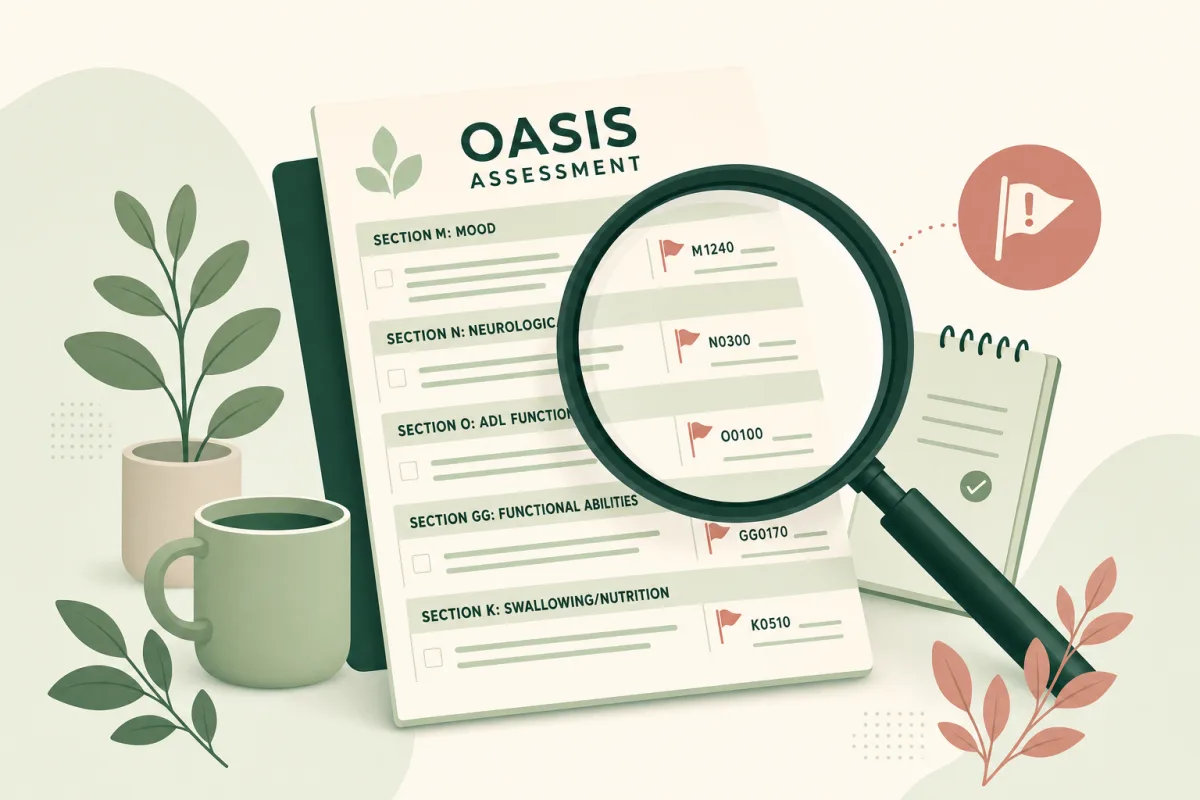
The Outcome and Assessment Information Set (OASIS) is the standardized patient assessment tool that every Medicare-certified home health agency must complete. CMS uses OASIS data for quality measurement, outcome reporting, payment determination under PDGM, and survey oversight.
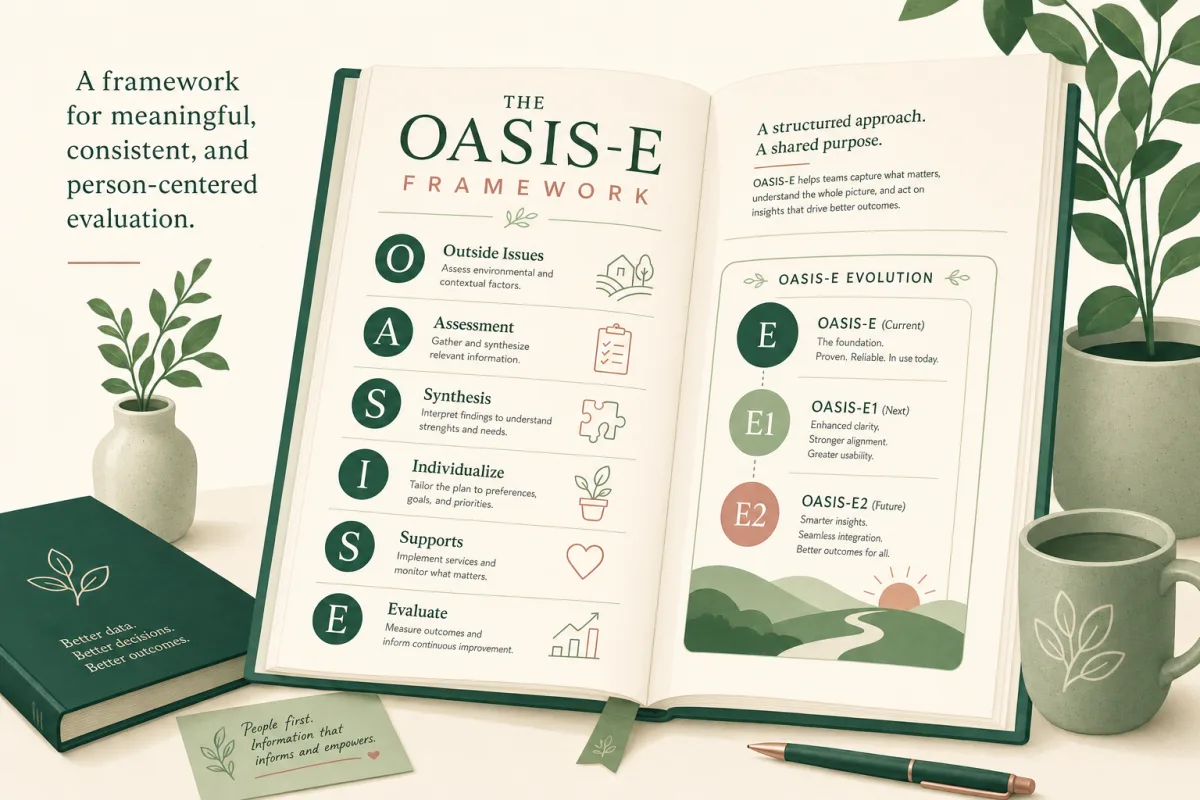
OASIS-E replaced OASIS-D and introduced significant changes to how agencies document patient status. CMS has since released two incremental updates, OASIS-E1 (effective January 1, 2025) and OASIS-E2 (effective April 1, 2026), that refine the OASIS-E framework. Assessments dated on or after April 1, 2026 use the OASIS-E2 item set. See our OASIS-E2 guide for the current version. Understanding the core OASIS-E changes and staying current with these updates is essential for maintaining compliance, optimizing reimbursement, and delivering quality care.
What Changed from OASIS-D to OASIS-E
OASIS-E introduced several major updates that affect how clinicians complete assessments and how agencies manage their documentation workflows.
Standardized Patient Assessment Data Elements (SPADEs): OASIS-E aligns home health assessments with other post-acute settings by incorporating standardized items required under the IMPACT Act. These shared data elements allow CMS to compare patient outcomes across home health, skilled nursing, inpatient rehabilitation, and long-term care hospitals.
Revised Functional Items: The functional assessment sections were restructured to use the GG items (Section GG), which measure self-care and mobility using a standardized coding scale. This replaced many of the legacy ADL/IADL items from previous OASIS versions and changed how clinicians score patient functional status.
Health Equity and Social Determinants: OASIS-E added new items related to health literacy, transportation access, and social isolation. These data points help CMS understand how social determinants of health affect patient outcomes in the home health setting.
Updated Clinical Items: Several clinical assessment areas were revised, including pain assessment, cognitive function screening, and behavioral health items. These updates reflect current clinical best practices and give agencies a more comprehensive view of patient needs.
Removal of Redundant Items: CMS removed or consolidated items that were duplicative or no longer useful for quality measurement, reducing some documentation burden while adding new required elements.
How OASIS-E Affects PDGM
The Patient-Driven Groupings Model (PDGM) combines OASIS data with claim data to set payment. The functional impairment level comes from points on OASIS items M1800-M1860 and M1033. The clinical group comes from the principal diagnosis on the claim, and the comorbidity adjustment from the claim’s secondary diagnoses.
OASIS-E introduced new Section GG coding conventions, and GG feeds quality measures and HHVBP. Section GG does not earn PDGM points, so train clinicians on both sets: M1800-M1860 for payment and GG for quality. Errors in M1800-M1860 change the functional impairment level and reimbursement directly.
Accurate OASIS-E completion also affects an agency’s standing in CMS quality programs. The Home Health Quality Reporting Program (HH QRP) and the Home Health Value-Based Purchasing (HHVBP) model both rely on OASIS-derived quality measures. Inaccurate assessments can lead to lower quality scores, reduced reimbursement under HHVBP, and increased survey scrutiny.
Key OASIS-E Sections to Focus On
Agencies should pay particular attention to these high-impact areas when training clinicians on OASIS-E:
Section G and Section GG: Functional Items: M1800-M1860 in Section G set the PDGM functional impairment level, together with M1033. Section GG uses a standardized 6-point scale that feeds quality measures. Clinicians must accurately assess what the patient can do safely, not just what they attempt. Errors in M1800-M1860 have direct reimbursement consequences. See the M1800-M1860 guide and the GG guide.
Clinical Assessment Items: Wound assessment and medication management feed quality measures, and the diagnoses behind them must be supported for the claim’s clinical grouping under PDGM. Documentation must be specific and supported by clinical findings in the visit notes.
Discharge Planning Items: OASIS-E discharge items affect quality measures and patient outcome scores. Agencies that complete discharge assessments accurately see better performance on CMS quality metrics.
Social Determinants Items: These items do not affect PDGM reimbursement, and the set has shrunk. The CY2026 home health final rule removed four standardized social-needs items from the Home Health Quality Reporting Program: one living situation item, two food items, and one utilities item. Complete the remaining SDOH items accurately as part of every OASIS submission.
Best Practices for OASIS-E Implementation
Transitioning to OASIS-E successfully requires more than just clinician training on new items. Agencies should take a comprehensive approach.
Build OASIS-E training into your ongoing education program rather than treating it as a one-time rollout. New clinicians, especially those coming from hospital or SNF settings, need to understand the home health-specific context of each OASIS item.
Implement a real-time QA process that catches errors at the point of documentation, not weeks later during a retrospective review. This reduces rework and ensures OASIS responses are consistent with clinical findings.
Use technology to support clinician accuracy. AI-powered OASIS tools can cross-reference clinical notes with OASIS responses, flag inconsistencies, and ensure that documentation supports each data point.
Monitor your OASIS data trends over time. Sudden shifts in functional scoring patterns or clinical grouping distributions can indicate training gaps or documentation issues that need to be addressed.
Getting OASIS-E Right
OASIS-E represents a meaningful evolution in how home health patient assessments are structured and used. Agencies that invest in understanding the changes, training their clinicians, and implementing quality assurance processes will see the benefits in reimbursement accuracy, compliance, and quality performance.
OASIS-E Resources and Tools
- OASIS AI Review, How AI-powered QA catches OASIS errors before they become compliance issues
- OASIS & HOPE QA, Automated quality assurance for both assessment types
- OASIS Accuracy Tips, Five strategies to improve your OASIS scoring