How to Respond to a Medicare ADR in 30 Days
Playbook for responding to Medicare ADRs in home health and hospice. Day-by-day workflow, common pitfalls, and how to maximize first-pass approval.
Lime Health Team
Lime Health AI
Why ADR Response Is the Most Stressful Compliance Task in Home Health
If you work in QA, billing, or compliance at a home health or hospice agency, the email no one wants to see is the one with “ADR” in the subject line. The 30-day clock starts immediately, the documentation requirements are exhaustive, and a missed deadline costs an average of $3,500 per claim, sometimes far more.
The good news: ADR response is a process. With the right workflow, you can consistently submit complete, defensible responses inside the deadline with high first-pass approval. This post walks through the day-by-day playbook.
For the foundational guide, see What Is an ADR? and The Medicare ADR Response Process.
Day 0: Receipt, Drop Everything and Log It
The 30-day clock starts the day the ADR arrives, not the day you read it. The first action is logging:
- Claim number(s)
- Time period covered
- Auditor (MAC, RAC, UPIC, OIG)
- Specific deadline date (calculated from receipt)
- Submission channel (esMD, NGSConnex, paper)
- Any special instructions in the letter
Most agencies use a tracking spreadsheet or dedicated audit-management software. Whatever you use, the log entry must be created same-day. Treat ADR receipt like a clinical urgency, it’s a regulatory urgency with similar consequences for delay.
Day 1: Assignment and Calendaring
Within 24 hours of receipt:
- Assign a primary owner (QA reviewer, compliance officer, or billing coordinator)
- Add the deadline to the team calendar with progress milestones at days 5, 10, 15, and 21
- Send a confirmation email to whoever forwarded the ADR
- Notify clinical leadership of the audit (especially if it’s a TPE round or first ADR from a new auditor)
Why milestones at 5/10/15/21? Because the response involves multiple stages, and you need internal buffers to catch problems before the deadline. Day 21 (not day 30) is your real submission target.
Days 2-5: Chart Compilation
Pull every document required to support the claim:
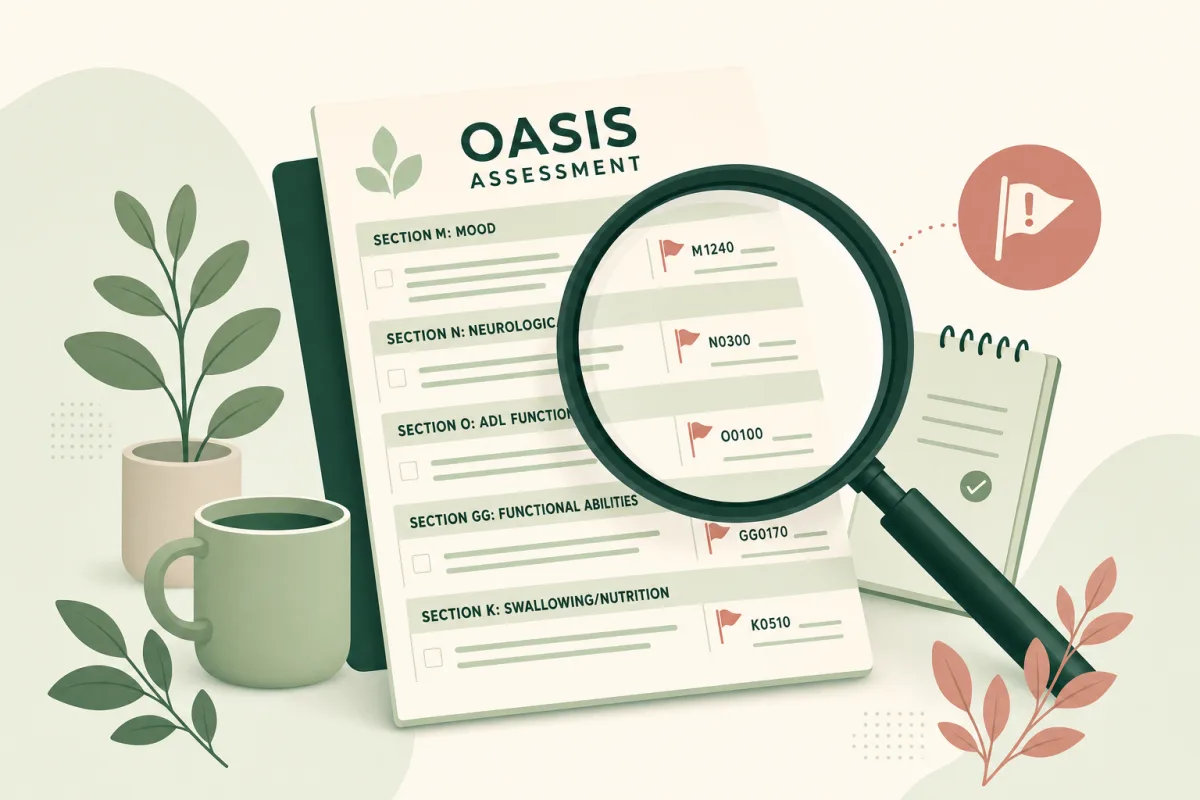
- The OASIS assessment for the relevant time point
- All clinical visit notes for the billing period
- Physician orders / Plan of Care (CMS-485)
- Face-to-Face encounter documentation
- Medication records
- Therapy notes (PT, OT, SLP) if applicable
- Communication notes between disciplines
- Discharge summary if applicable
For hospice ADRs, additionally:
- Physician certification of terminal illness
- All recertification narratives in the period
- Hospice election form
- IDG (Interdisciplinary Group) meeting notes
- Level of care documentation
Manual chart compilation typically takes 2-4 hours per ADR. AI-assisted compilation completes this in under 30 minutes by pulling files automatically from your EMR (HCHB, WellSky, MatrixCare, Axxess, DSL).
Days 6-10: Documentation Review
The most important step, and the one most often skipped under deadline pressure.
Before submitting, run the assembled chart through completeness and consistency checks:
OASIS-narrative consistency
Does the visit narrative describe the patient consistently with OASIS responses? This is the single most common audit citation. If the narrative says the patient “ambulates independently with cane” but Section GG is scored “requires substantial assistance,” you have a problem the auditor will catch.
Section GG functional scoring
Does the narrative support the scored functional impairment level? Section GG scoring drives the PDGM functional impairment level under home health payment. Auditors look for narrative support for High-level scoring especially.
ICD-10 alignment
Does the primary diagnosis fit the OASIS clinical group? A primary diagnosis of GI bleeding with a wound-care narrative is an obvious mismatch.
Homebound documentation
Is homebound status clearly justified with specific clinical evidence? Vague language like “patient generally stays home” is insufficient.
Skilled need documentation
Is skilled need clearly justified with specific service rationale? “Nursing visits” without specific skilled justification triggers denial.
F2F encounter
Is the Face-to-Face encounter present, dated, and signed by the certifying physician?
Physician signatures
Are all required physician signatures present and timely?
Real-time AI QA tools like Lime’s OASIS Review can complete this consistency check automatically across hundreds of rules in seconds, vs. 1-2 hours of manual review per chart.
Days 11-15: Narrative Cover Letter Drafting
The cover letter is the most important single document in your ADR response. It’s what the auditor reads first, and a strong narrative dramatically improves first-pass approval rates.
A well-structured ADR cover letter includes:
- Header, agency name, NPI, claim number, ADR reference number, response date
- Table of contents, every document enclosed, in submission order
- Narrative summary, 1-2 paragraphs tying documentation to the requested service (homebound status, skilled need, medical necessity)
- Specific document references, “See visit note dated 02/15/26 for documentation of substantial assistance with mobility”
- Signature, clinical leader (DON, CCO, or compliance officer)
- Contact information, for auditor follow-up questions
A weak cover letter forces the auditor to search through pages of documentation looking for the supporting evidence. A strong cover letter walks them directly to it. This is the single highest-leverage element of the entire response.
Days 16-21: Final Review and Submission
Day 16-20: Final review. Have a second QA reviewer scan the assembled response for:
- Documentation gaps that need a final pull from the EMR
- Cover letter polish, clarity, completeness, accuracy
- Submission channel verification (esMD vs NGSConnex vs paper)
- File format compliance (PDF, naming conventions)
Day 21: Submit. Through the proper channel. Capture the confirmation number / receipt and store it with your ADR record.
Why day 21? Buffer for system failures. esMD has occasional outages; NGSConnex submissions sometimes get rejected for formatting; paper mail can be delayed. Submitting on day 21 leaves 9 days of buffer to fix any issues.
Days 22-30: Confirm Submission, Begin Tracking
After submission:
- Verify the submission was accepted (no error notifications)
- Update your ADR tracking system with submission date, confirmation number, and submission channel
- Move the ADR to “submitted, awaiting decision” status
- Set a follow-up reminder for 60-90 days out
Common Pitfalls That Tank ADR Responses
Based on patterns from hundreds of ADR responses:
- Missing the deadline, most preventable error; install calendar buffers
- Submitting via wrong channel, especially confusing esMD vs NGSConnex
- Incomplete chart, auditor needs everything in one submission, not in pieces
- OASIS-narrative mismatch, the single most common audit citation
- Weak or absent cover letter, auditor has to guess what supports what
- No internal tracking, agencies that don’t track ADRs as a workflow miss patterns
- Single person handling all ADRs, one PTO day at the wrong time = missed deadline
When to Outsource Instead
Manual ADR response takes 4-8 hours of QA time per ADR. For agencies receiving 10+ ADRs per month, that’s 40-80 hours of staff time monthly, often pulling QA reviewers away from ongoing clinical work.
Outsourcing makes sense when:
- ADR volume is consistently above QA team capacity
- First-pass approval rates are below 70%
- You’re under TPE Round 2 or 3 (high-stakes)
- Staff turnover puts ADR continuity at risk
Lime’s ADR Response Service handles the entire 7-step process under 1 hour per ADR with 90%+ first-pass approval rates.
What to Do This Week
If you have an active ADR right now:
- Verify it’s logged in your tracking system
- Confirm the deadline date and add milestone reminders
- Use this playbook to structure the next 21 days
- If you don’t have capacity to respond well, consider outsourcing, the cost of a missed or denied ADR exceeds the cost of help
If you don’t have an active ADR (lucky you):
- Audit your ADR tracking system. Does it exist? Is it actually used?
- Document your current ADR response workflow
- Identify the single biggest weakness, usually documentation review or cover letter quality
- Either fix the workflow or evaluate outsourcing options before the next ADR arrives
The cost of being unprepared is far higher than the cost of preparation.