Home Health Documentation Best Practices for 2025
Strong clinical documentation is the foundation of compliance, reimbursement, and quality care in home health. The best practices every agency should follow.
Lime Health Team
Lime Health AI
Why Documentation Quality Matters More Than Ever
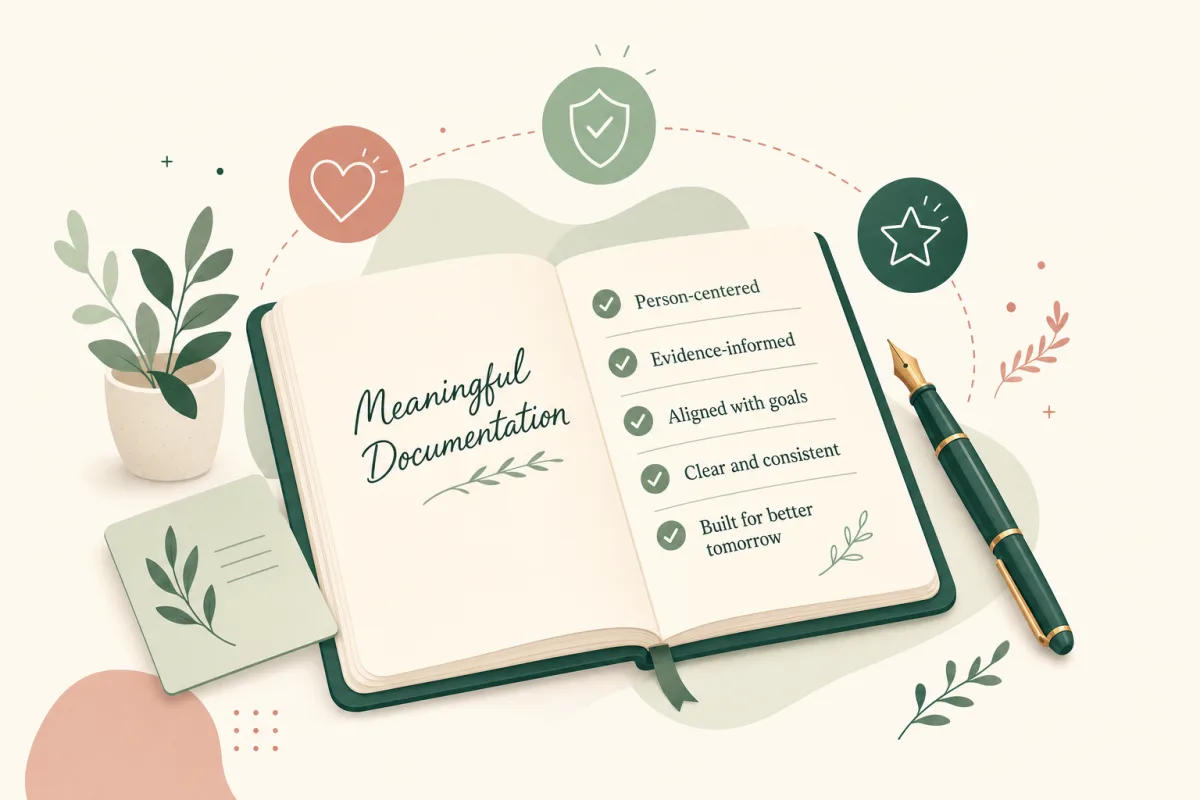
Home health documentation serves multiple masters. It supports patient care, drives reimbursement under PDGM, satisfies CMS compliance requirements, protects against audits, and contributes to quality measure performance. When documentation falls short in any of these areas, the consequences compound — denied claims, audit exposure, poor quality scores, and ultimately, financial strain on the agency.
In 2025, the stakes continue to rise. CMS enforcement activity has increased, PDGM reimbursement depends entirely on accurate clinical documentation, and staffing challenges mean agencies need to maximize efficiency without sacrificing quality.
Document at the Point of Care
The single most impactful change an agency can make is shifting documentation from an after-hours activity to a point-of-care practice. When clinicians document during or immediately after the patient visit, the clinical details are fresh, accurate, and complete.
After-hours charting — the industry-wide norm where clinicians finish notes in the evening or on weekends — introduces errors, omissions, and inconsistencies. A clinician who sees six patients in a day and documents all six that evening is relying on memory for clinical details that should be captured precisely.
Point-of-care documentation also improves turnaround time for billing and reduces the QA workload. Charts that arrive complete and accurate the first time require less review and fewer queries back to the clinician.
Structure Visit Notes for Compliance
Every home health visit note should follow a structure that naturally supports compliance requirements. Effective visit notes include several consistent elements.
Homebound status — Document the specific clinical reasons the patient qualifies as homebound for every visit, not just the start of care. Use objective findings rather than vague statements. “Patient requires maximum assist of one for transfers due to bilateral LE weakness and unsteady gait with rolling walker” is far stronger than “patient is homebound.”
Skilled need — Each visit note must clearly demonstrate why a skilled clinician is required. Connect the intervention to the patient’s clinical condition and plan of care. Payers review skilled need documentation closely, and vague or generic statements are a common denial reason.
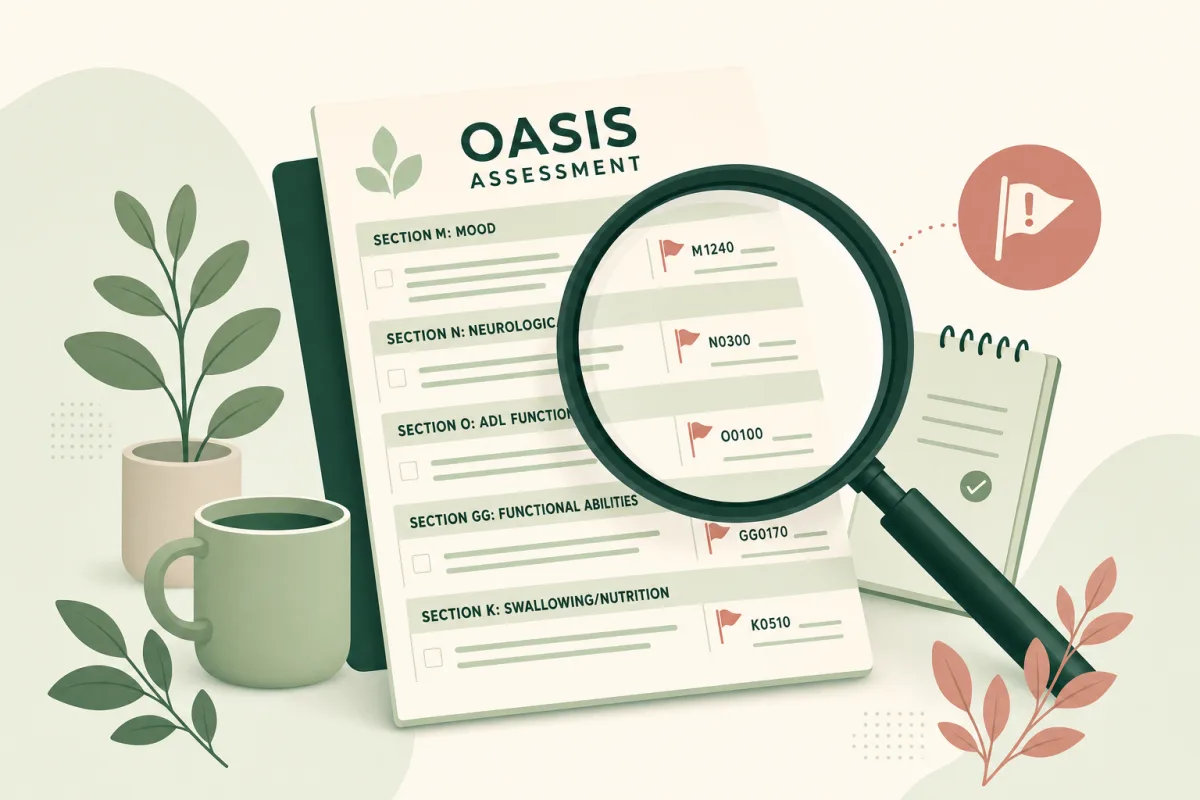
Clinical findings tied to OASIS — Visit note observations should support OASIS responses. If the OASIS scores the patient as requiring substantial assistance with bathing, the clinical notes should describe the functional limitations that support that score.
Patient response to interventions — Document how the patient responded to the care provided, not just what was done. This supports medical necessity and demonstrates progress toward care plan goals.
Changes in condition — Any changes from the previous visit should be explicitly noted, including whether they warrant a physician notification or care plan update.
AI tools like Lime’s clinical notes solution can help structure visit notes to include all of these elements automatically, reducing the risk of missing required documentation.
Align Documentation with PDGM
Under PDGM, documentation quality directly affects reimbursement. The clinical grouping, functional level, and comorbidity adjustment are all derived from what clinicians document.
Diagnosis coding must be specific and supported by clinical findings. A diagnosis of “heart failure” is less useful than “systolic heart failure, NYHA Class III” when it comes to accurate PDGM classification. Clinicians should document with enough clinical specificity to support precise ICD-10 coding.
Comorbidity documentation is frequently overlooked. Secondary diagnoses that qualify as PDGM comorbidity adjustments can significantly affect reimbursement, but only if they are documented in the clinical record and actively addressed in the plan of care.
Functional documentation under the GG items requires particular attention. The functional score directly determines the PDGM functional level, and inconsistencies between visit note observations and OASIS functional responses are a leading audit trigger.
Reduce Documentation Burden Without Sacrificing Quality
Clinician burnout is the elephant in the room. Agencies cannot simply demand better documentation without addressing the time and effort required to produce it.
Several strategies help reduce burden while maintaining quality. Structured documentation templates that guide clinicians through required elements reduce the cognitive load of free-text charting. Speech-to-text tools allow clinicians to narrate their findings rather than typing them. AI-powered documentation assistants can capture clinical encounters in real time and generate compliant notes automatically.
The goal is to make the right documentation the easy documentation. When compliance-quality charting takes less effort than incomplete charting, quality improves naturally.
Build a Documentation Culture
Documentation quality is ultimately a cultural issue. Agencies that treat documentation as a box-checking exercise get box-checking quality. Agencies that connect documentation to patient care, reimbursement, and professional practice get meaningfully better results.
This starts with leadership setting clear expectations, providing ongoing education rather than annual competency checks, and giving clinicians feedback on their documentation quality — not just their productivity numbers.
QA findings should be educational, not punitive. When a clinician receives specific, constructive feedback on how to improve their documentation, most respond positively. When they receive a generic correction with no context, the same patterns repeat.
Compare Documentation Approaches
Looking for ways to improve your agency’s documentation workflow? See how different approaches compare:
- AI Scribe for Home Health — Capture clinical documentation during the visit automatically
- AI vs. Manual Charting — How AI documentation compares to traditional charting
- OASIS AI Review — Automated QA that catches documentation issues in real time
- Reducing Clinician Burnout — Strategies for addressing the documentation burden