AI vs. Manual Charting in Home Health: A Comparison
Home health agencies are weighing AI documentation against traditional manual charting. Here's an honest comparison of time, accuracy, compliance, and cost.
Lime Health Team
Lime Health AI
The Documentation Status Quo
Manual charting has been the standard in home health for decades. Clinicians complete patient visits, then document their findings — often hours later, at the kitchen table or on the couch after their kids are in bed. It works, technically, but the costs are significant: clinician burnout, documentation errors, delayed billing, and an ongoing struggle to meet compliance requirements.
AI-powered clinical documentation offers a fundamentally different approach. Instead of relying on clinician recall and manual data entry, AI captures the clinical encounter as it happens and generates structured documentation automatically. But is the difference meaningful enough to justify the change? Here is a straightforward comparison.
Time: Where the Gap Is Largest
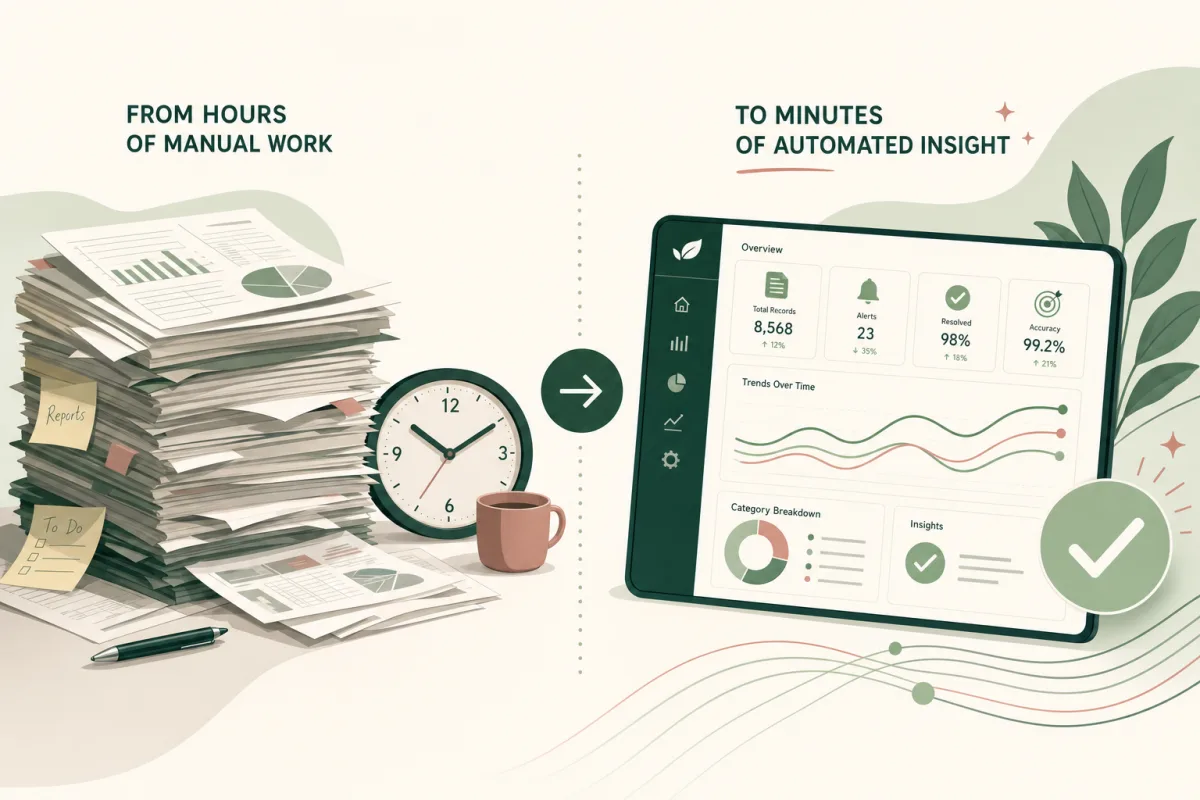
Manual charting for a home health visit typically takes 30 to 60 minutes per patient, depending on the visit type and the clinician’s speed. For a Start of Care with OASIS, that number can reach two to three hours. Most of this time happens outside of paid working hours, contributing directly to the overtime and burnout that plagues the industry.
AI documentation reduces clinician documentation time to the length of the visit itself — or a brief recording session immediately afterward. The AI captures the clinical encounter, structures the information into compliant note formats, and populates relevant assessment items. Clinicians review and approve rather than create from scratch.
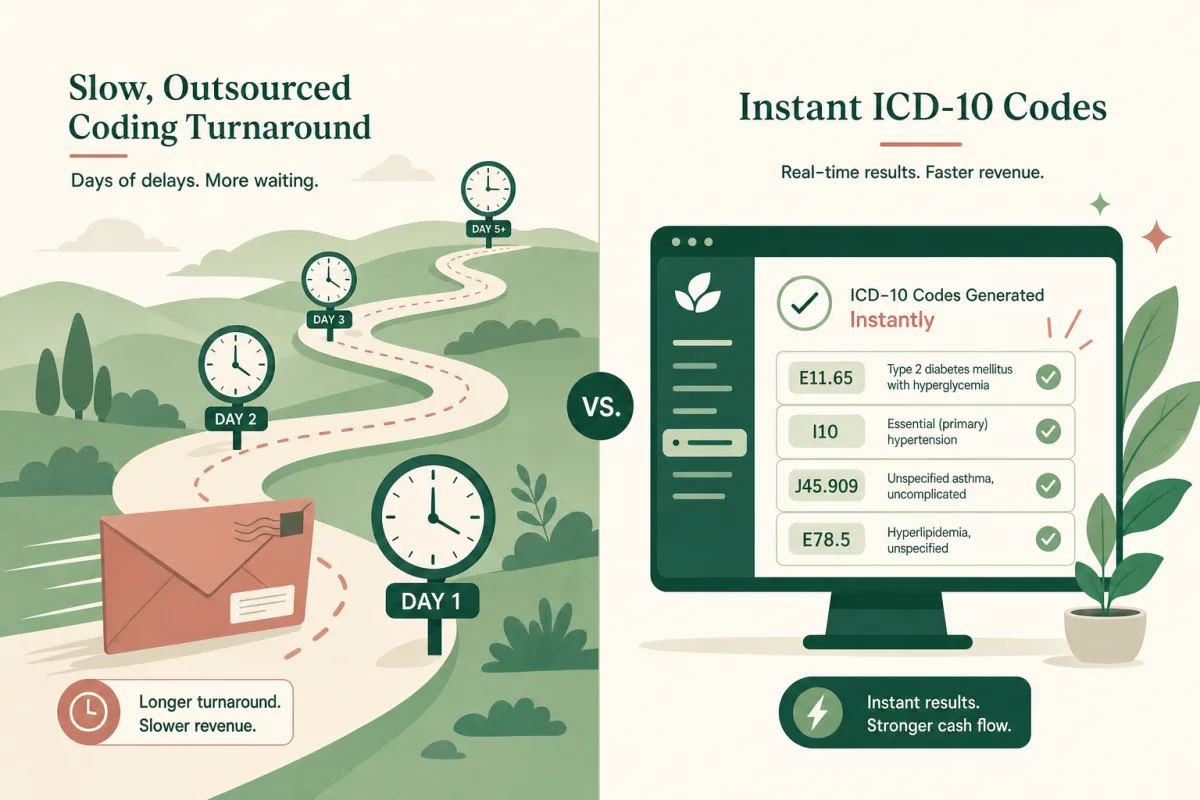
For an agency with 20 field clinicians each seeing 5 patients per day, the math is straightforward. Reducing per-visit documentation time from 45 minutes to 10 minutes of review recovers thousands of hours per month — hours that translate to either reduced overtime costs or additional patient visits.
Accuracy: The Memory Problem
Manual charting has an inherent accuracy limitation: human memory. A clinician who sees six patients and documents all six that evening is reconstructing clinical details from memory. Studies in clinical documentation consistently show that delayed documentation results in omissions, inaccuracies, and inconsistencies.
AI documentation captures information in real time, eliminating the memory gap. Clinical findings, patient statements, vital signs, and assessment observations are captured as they occur, not reconstructed hours later.
This matters most for OASIS accuracy. OASIS items require precise clinical observations that support specific scoring conventions. When a clinician cannot clearly recall whether a patient required verbal cuing or hands-on assistance for a transfer, the OASIS response becomes a best guess rather than an accurate assessment.
Compliance: Documentation That Defends Itself
From a compliance perspective, the difference between AI and manual charting is less about the technology and more about consistency. Manual charting quality varies significantly across clinicians. Some produce thorough, compliant documentation naturally. Others consistently miss required elements, use vague language, or fail to connect clinical findings to assessment responses.
AI documentation applies the same compliance standards to every note. Required elements like homebound status, skilled need, and clinical-OASIS correlation are built into the documentation structure. The AI flags gaps and inconsistencies before the note is finalized, functioning as a real-time quality check.
This consistency is particularly valuable during audits. Agencies with uniform documentation quality across all clinicians present a stronger compliance posture than agencies where documentation quality depends entirely on which clinician completed the chart.
Cost: Beyond the Subscription Price
The cost comparison between AI and manual documentation is not simply the price of a software subscription versus zero. Manual charting has significant hidden costs.
Overtime is the most obvious. Clinicians documenting after hours are either being paid overtime or absorbing unpaid work that drives turnover. Recruiting and training a replacement clinician costs far more than a documentation tool.
Claim denials from documentation deficiencies have a direct financial impact. Each denied claim requires staff time to appeal, delays revenue, and sometimes results in unrecoverable losses.
QA staff time is another hidden cost. Agencies that rely on manual charting typically need larger QA teams to review and correct documentation issues. AI-generated documentation that arrives more complete and consistent reduces the QA workload.
When these costs are factored in, agencies dealing with significant overtime, denial rates, or turnover often find that AI documentation pays for itself through these operational savings.
Clinician Experience: The Retention Factor
In a market where clinician recruitment and retention are critical challenges, documentation burden is consistently cited as a top driver of burnout and turnover. Clinicians who chose home health for the patient interaction find themselves spending more time on paperwork than on care.
AI documentation directly addresses this. When documentation is handled during the visit rather than after hours, clinicians get their personal time back. Agencies implementing AI documentation consistently report improvements in clinician satisfaction and retention.
This is not a secondary benefit — it may be the most important one. An agency that retains its experienced clinicians maintains care quality, reduces recruitment costs, and preserves institutional knowledge that takes years to build.
Making the Decision
The comparison between AI and manual charting is not close on most dimensions. AI documentation saves time, improves accuracy, strengthens compliance, reduces hidden costs, and supports clinician retention. The relevant question for most agencies is not whether to adopt AI documentation, but how quickly they can implement it effectively. Lime’s AI Scribe is designed to make that transition as smooth as possible for home health agencies.
Compare Your Options
- AI Documentation vs. Manual Charting — Detailed side-by-side comparison
- AI Scribe for Home Health — How ambient AI documentation works in practice
- How AI Scribes Are Transforming Home Health — The technology behind AI clinical documentation
- Reducing Clinician Burnout — Why documentation burden is a retention issue