OASIS Accuracy & Compliance: What Agencies Need to Know
OASIS accuracy is a top CMS audit target. Learn common compliance risks, how audits are triggered, and how to build a QA process that protects your agency.
Lime Health Team
Lime Health AI
Why OASIS Compliance Is Under the Microscope
CMS has made OASIS accuracy a priority enforcement area. Home health agencies face growing scrutiny through Targeted Probe and Educate (TPE) reviews, Recovery Audit Contractor (RAC) audits, and Supplemental Medical Review Contractor (SMRC) investigations. Each of these programs uses OASIS data as a starting point for identifying potential compliance issues.
The stakes are significant. Agencies found to have systematic OASIS inaccuracies can face claim denials, overpayment demands, and referral to the OIG for further investigation. Understanding what triggers these reviews and how to prevent them is essential for any agency operating under Medicare.
Common OASIS Accuracy Problems
Several patterns consistently appear when CMS identifies OASIS accuracy issues at an agency level.
Clinical-OASIS Disconnect — The most common finding is a mismatch between what the clinical visit notes describe and what the OASIS assessment indicates. For example, a visit note may describe a patient ambulating independently to the door, while the OASIS functional items score the patient as requiring substantial assistance. This disconnect raises flags during any audit review.
Upcoding Functional Items — Scoring patients as more functionally impaired than clinical evidence supports can increase PDGM reimbursement in the short term, but it creates significant compliance exposure. CMS algorithms specifically look for agencies with functional scoring distributions that deviate from expected norms.
Inconsistent Wound Documentation — Wound assessments that show improvement between episodes but then worsen at recertification without clinical explanation are a known audit trigger. Consistent, detailed wound documentation across the episode is critical.
Missing or Late Assessments — OASIS assessments completed outside the required timeframes (Start of Care within 5 days, Resumption of Care within 2 days) create automatic compliance issues regardless of the accuracy of the assessment itself.
Diagnosis Coding Misalignment — When OASIS primary and secondary diagnoses do not match the clinical record or are not supported by the physician’s plan of care, the entire assessment comes into question.
What Triggers a CMS Audit
Understanding the data patterns that trigger audits helps agencies proactively manage their risk.
CMS uses statistical analysis to identify outlier agencies. Key metrics include average case-mix weight compared to state and national averages, distribution of PDGM clinical groupings, functional improvement rates, hospitalization rates relative to risk-adjusted expectations, and episode frequency per beneficiary.
Agencies that consistently cluster at the high end of reimbursement for their patient population will attract attention. The goal is not to minimize reimbursement but to ensure that every OASIS response is accurately supported by clinical documentation.
Complaints and referrals also trigger reviews. Disgruntled employees, competitor agencies, and beneficiary complaints can all initiate an investigation that starts with OASIS data review.
Building an Internal QA Process
A robust internal quality assurance process is the best defense against compliance issues. Effective OASIS QA programs share several characteristics.
Review at the point of care, not after the fact. When QA happens during or immediately after documentation, clinicians can clarify their findings while the clinical context is fresh. Retrospective reviews completed days or weeks later are less effective and more costly.
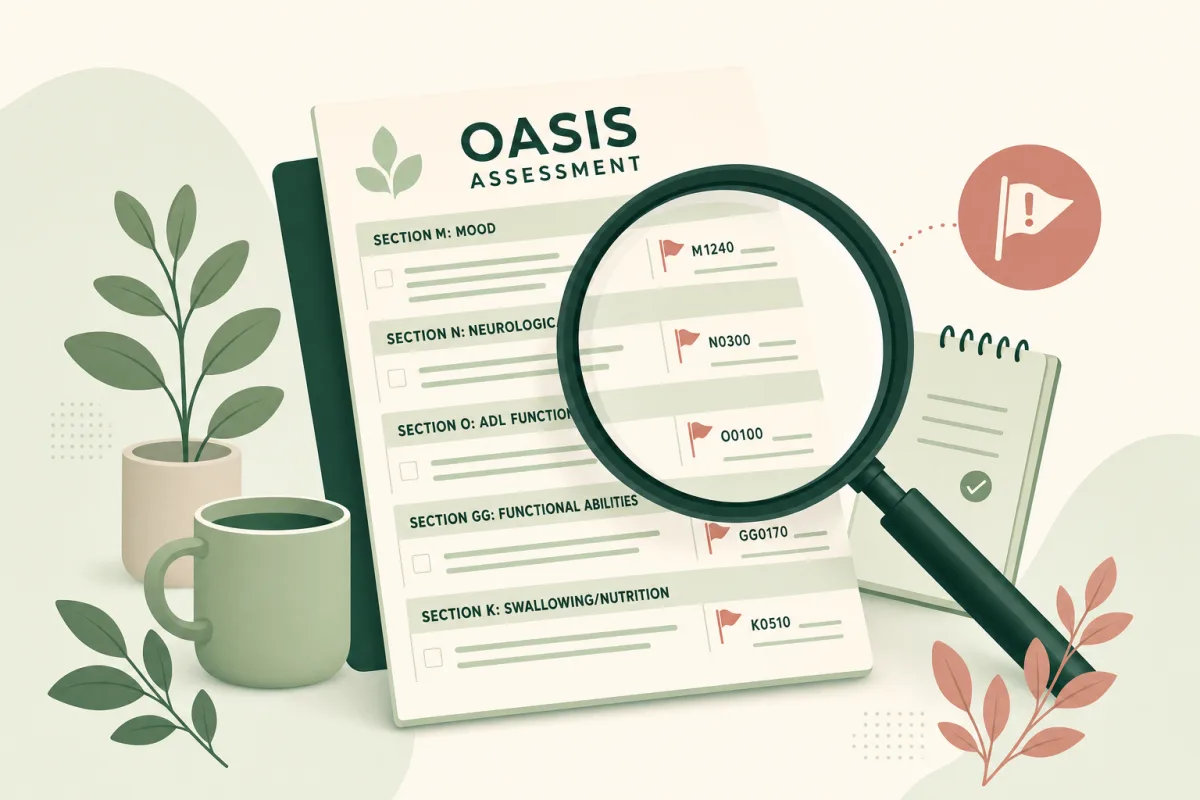
Focus on high-impact items first. Not every OASIS item carries the same compliance risk. Prioritize your QA efforts on functional items (Section GG), wound assessment, clinical grouping drivers, and any items where your agency shows unusual patterns.
Use data to target your reviews. Rather than reviewing every OASIS uniformly, analyze your agency’s data to identify clinicians, patient populations, or assessment types that show higher error rates. This targeted approach makes better use of limited QA resources.
Document your QA process. In the event of an audit, demonstrating that your agency has a documented, functioning QA program can be a significant mitigating factor. Keep records of reviews completed, errors identified, corrections made, and education provided.
Close the loop with clinician education. QA findings should feed directly into ongoing education. When patterns emerge — for example, multiple clinicians struggling with GG item scoring — address them through targeted training rather than one-off corrections.
Technology’s Role in OASIS Compliance
Manual OASIS review is time-consuming and inherently limited. A single QA reviewer can only check a fraction of completed assessments, and human reviewers may miss subtle inconsistencies across complex multi-page documents.
AI-powered OASIS review tools can analyze every assessment in real time, cross-referencing OASIS responses against clinical documentation, flagging inconsistencies, and identifying patterns that suggest training needs. This technology does not replace clinical judgment but amplifies the reach and consistency of QA programs.
Automated compliance monitoring can also track your agency’s data patterns against the same benchmarks CMS uses, alerting you to potential outlier status before it triggers external review.
Protecting Your Agency
OASIS accuracy and compliance are not separate from good patient care — they are expressions of it. An accurate OASIS assessment reflects a thorough clinical evaluation, appropriate care planning, and precise documentation. Agencies that approach OASIS compliance as a quality initiative rather than a regulatory burden consistently perform better on both fronts.
OASIS Compliance Tools and Resources
- OASIS AI Review — Automated OASIS QA that catches errors before submission
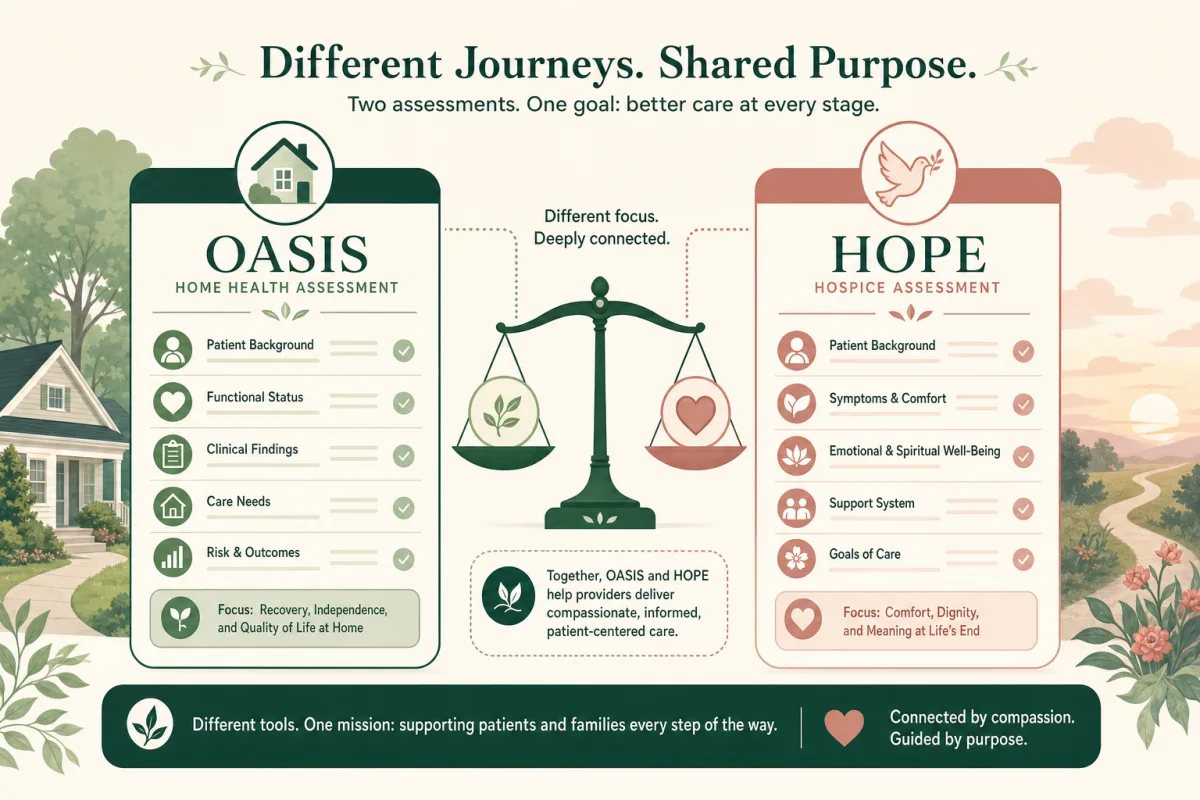
- OASIS & HOPE Quality Assurance — Comprehensive quality assurance for both assessment types
- ICD-10 Coding Best Practices — Ensure your diagnosis coding supports your OASIS assessments