Best Hospice IDG Documentation Tools in 2026
Compare 2026 hospice IDG documentation tools: EMR IDG modules, predictive IDG prep, care plan review workflows, and visit-note QA before each meeting.
Lime Health Team
Lime Health AI
Updated October 2026: the IDG membership and 15-day review rules now quote 42 CFR 418.56. Mosai Muse (formerly Medalogix Muse) replaces a vendor we could no longer confirm offers IDG software, the EMR entry reflects the AI and IDG features EMRs now advertise, and Lime is no longer ranked because it does not offer hospice IDG documentation.
Why IDG Documentation Matters
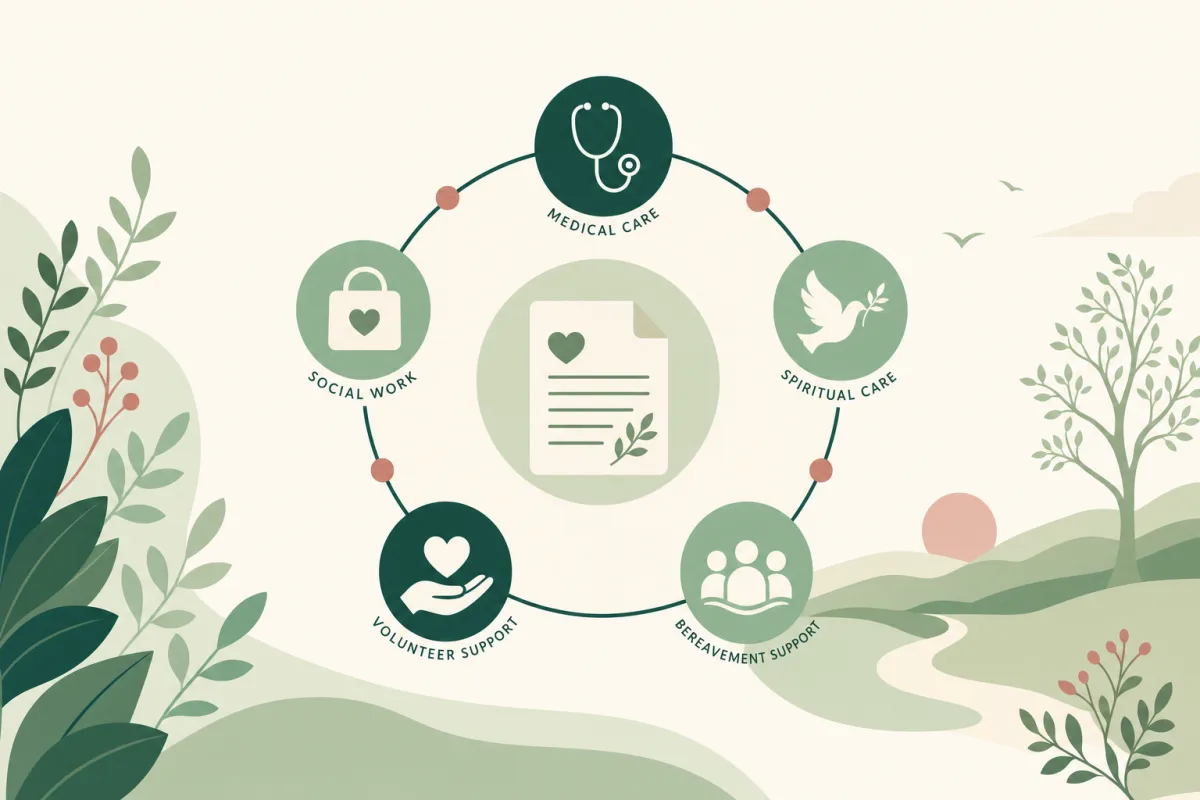
The Interdisciplinary Group (IDG) is the core of hospice care coordination. Under 42 CFR 418.56, the IDG must include a doctor of medicine or osteopathy, a registered nurse, a social worker (or marriage and family therapist or mental health counselor), and a pastoral or other counselor. The group must review, revise, and document each patient’s plan of care as often as the patient’s condition requires, and at least every 15 calendar days.
IDG documentation must show the team reviewed the patient’s status, updated the plan with current assessment information, and recorded progress toward goals. Weak IDG documentation is a common survey finding, and auditors request IDG notes in hospice ADRs.
1. Hospice EMR IDG Modules, Best Built-In Solution
Best for: Agencies wanting IDG documentation inside their existing EMR
Most hospice EMRs include IDG modules with templates for team discussions, care plan updates, and discipline-specific input. Axxess Hospice, for example, advertises automated IDG workflows and AI-supported workflows for interdisciplinary teams.
IDG documentation strengths:
- No separate tool, documentation stays in the EMR
- IDG templates built around CMS requirements
- Patient data available during the meeting
- Care plan updates linked to IDG decisions
- Discipline-specific documentation sections
Considerations:
- Template quality and AI features vary across EMR vendors
- Many teams still enter meeting notes by hand during or after the meeting
- Test how well the module pulls in recent visit documentation
2. Mosai Muse, Best for Predictive IDG Prep
Best for: Hospices wanting to focus IDG time on patients who need care plan changes
Muse comes from Mosai, the name Forcura and Medalogix adopted on October 29, 2025. Muse scores risk after each visit and ranks your census by risk to anticipate end-of-life needs. Mosai positions it for IDG prep, with near real-time visibility into each patient’s trajectory so discussions focus on the patients most in need of care plan updates.
IDG documentation strengths:
- Risk-ranked patient lists for IDG agendas
- Visit frequency and care intensity recommendations
- Uses structured and unstructured EMR data
- Mosai lists integrations with HCHB, MatrixCare, WellSky, and Axxess
Considerations:
- Predictive analytics, not a documentation tool
- Adds a platform alongside your EMR
3. Care Plan Review Workflows, Best for Plan of Care Compliance
Best for: Agencies focused on care plan quality and the 15-day review cycle
Some EMRs and add-on tools support the care plan review part of IDG meetings. They help teams review each patient’s plan in a set order, spot needed updates, and document changes.
IDG documentation strengths:
- Structured care plan review workflows
- Alerts for plans due for review
- Documentation of plan changes and rationale
- Tracking of each discipline’s contributions
Considerations:
- Focused on care plan review, not visit documentation or meeting management
- Usually part of a larger EMR rather than a standalone tool
A Note on Lime Health AI
Lime Health AI does not offer hospice IDG documentation or a hospice scribe, so it is not ranked here. Its Sentinel QA service reviews every home health and hospice visit note within about 10 minutes of submission, which helps your team fix note gaps before the IDG meets. Lime’s hospice ADR service compiles IDG notes with the rest of the chart when an ADR arrives.
Making IDG Meetings More Effective
The best IDG documentation starts before the meeting. Agencies with complete, timely visit notes throughout the benefit period run more productive IDG meetings, support recertification decisions better, and produce stronger compliance records.
Key practices:
- Close all visit notes before the IDG meeting, and QA them so the team works from accurate notes
- Use a structured meeting format covering each patient in order
- Document specific clinical findings and team decisions, not boilerplate language
- Connect IDG discussions to recertification decisions and care plan updates, using the hospice recertification checklist
- Track meeting frequency against the 15-day rule, patient review coverage, and documentation completeness
Hospice IDG Resources
- Hospice Recertification Narratives, IDG findings should support recertification decisions
- Hospice Recertification Checklist, What each recertification needs on file
- Hospice Documentation Best Practices, Strengthen the visit documentation that feeds IDG discussions
- HOPE Assessment Requirements, The HOPE requirements in effect since October 2025
- Best Hospice Compliance Tools, Comprehensive compliance tool comparison