Best Hospice Compliance Tools in 2026
Compare 2026 hospice compliance tools for HOPE timeliness, visit-note QA, EMR audit checks, quality analytics, staff training, and ADR readiness.
Lime Health Team
Lime Health AI

Updated October 2026: this guide now reflects the FY2027 hospice final rule (mandatory election statement addendum, the new SSVI, and HOPE submission timing) and HOPE v1.03. Vendor entries were re-checked against each vendor’s site: HospiceWorks is now described as the hospice EMR it is, the training entry now covers HOPE credentialing, and the Lime entry covers Sentinel QA and Lime’s hospice ADR service only.
The Growing Compliance Burden for Hospice
Hospice agencies face mounting compliance requirements. The HOPE assessment replaced the Hospice Item Set on October 1, 2025, and HOPE v1.03 took effect on October 1, 2026. The FY2027 hospice final rule, issued July 30, 2026, made the election statement addendum mandatory for every patient electing hospice. It also introduced the Service and Spending Variation Index (SSVI), a claims-based score in which a higher score signals potentially concerning utilization. CMS scrutiny of long-stay patients continues, and documentation standards for recertification narratives keep tightening.
The right compliance tools help your agency stay ahead of regulatory requirements, keep documentation quality high, and prepare for audits before they happen.
1. Sentinel QA by Lime Health AI, Best for Automated Visit-Note QA
Best for: Hospice and home health agencies wanting every visit note reviewed, not a sample
Sentinel QA is an automated back-office QA service. It reviews every home health and hospice visit note within about 10 minutes of submission, with no EMR integration and no workflow change. Findings land where your QA feedback lands today, and your QA team supervises the system instead of reading every chart.
Compliance strengths:
- 100% visit-note coverage instead of 10-20% sampling
- Reviews the note alongside the plan of care, physician orders, medication records, and subforms
- Every finding names the issue, its severity, the rule, the supporting evidence, and a recommended correction
- Flags “Cannot Evaluate” when a source document is missing
- Priced per review
Lime’s hospice ADR service: when an ADR arrives, you forward the notice and Lime’s hospice ADR service compiles the chart, reviews terminal prognosis support, recertification narratives, IDG notes, and election forms, drafts the cover letter, submits through esMD or your contractor’s portal, and tracks the request to closure.
Considerations:
- Support starts with HomeCare Homebase, with more EMRs onboarding, so confirm your EMR
- Lime does not offer a hospice scribe or HOPE documentation, so pair Sentinel QA with your EMR’s HOPE workflow
2. HospiceWorks, Best Hospice EMR With Built-In Audit Checks
Best for: Hospices choosing an EMR with documentation review built in
HospiceWorks is a hospice EMR. Its Hospice Audit Guard Co-Pilot surfaces documentation gaps in nurse visit notes and admissions in real time, so clinicians fix them before the record closes.
Compliance strengths:
- Real-time documentation gap checks on visit notes and admissions
- Documentation, scheduling, and workflow tools in one system
- Focus on building a defensible record
Considerations:
- An EMR replacement, not an add-on to your current system
- Confirm HOPE, benefit period, and recertification tracking features in a demo
3. Hospice EMR Compliance Features, Best for Workflow Simplicity
Best for: Agencies wanting compliance prompts inside the system they already use
Major hospice EMRs now build compliance support into daily workflows. Axxess Hospice, for example, advertises embedded guidance and reminders for HOPE requirements, automated IDG workflows, and AI-supported billing workflows starting at the Notice of Election.
Compliance strengths:
- No separate tool to manage
- HOPE prompts and reminders inside the clinical record
- IDG and recertification workflows tied to the patient chart
Considerations:
- Depth varies by vendor, so test the HOPE and IDG features in a demo
- Prompts help clinicians complete records, but they do not review note quality across your census
4. Quality Analytics and Benchmarking Platforms, Best for Quality Monitoring
Best for: Agencies tracking quality measures and CAHPS Hospice results against peers
Hospice analytics vendors track quality measures, CAHPS Hospice Survey results, and benchmarks against state and national averages. With HOPE-based measures moving into public reporting, these dashboards show where your scores trail peers.
Compliance strengths:
- Quality measure tracking and trend analysis
- CAHPS Hospice Survey monitoring
- Peer benchmarking
Considerations:
- Analytics identify risks, but they do not fix individual notes
- Confirm the vendor has updated its measures for HOPE
5. HOPE Training and Credentialing, Best for Staff Competency
Best for: Agencies building clinician skill on HOPE and hospice regulations
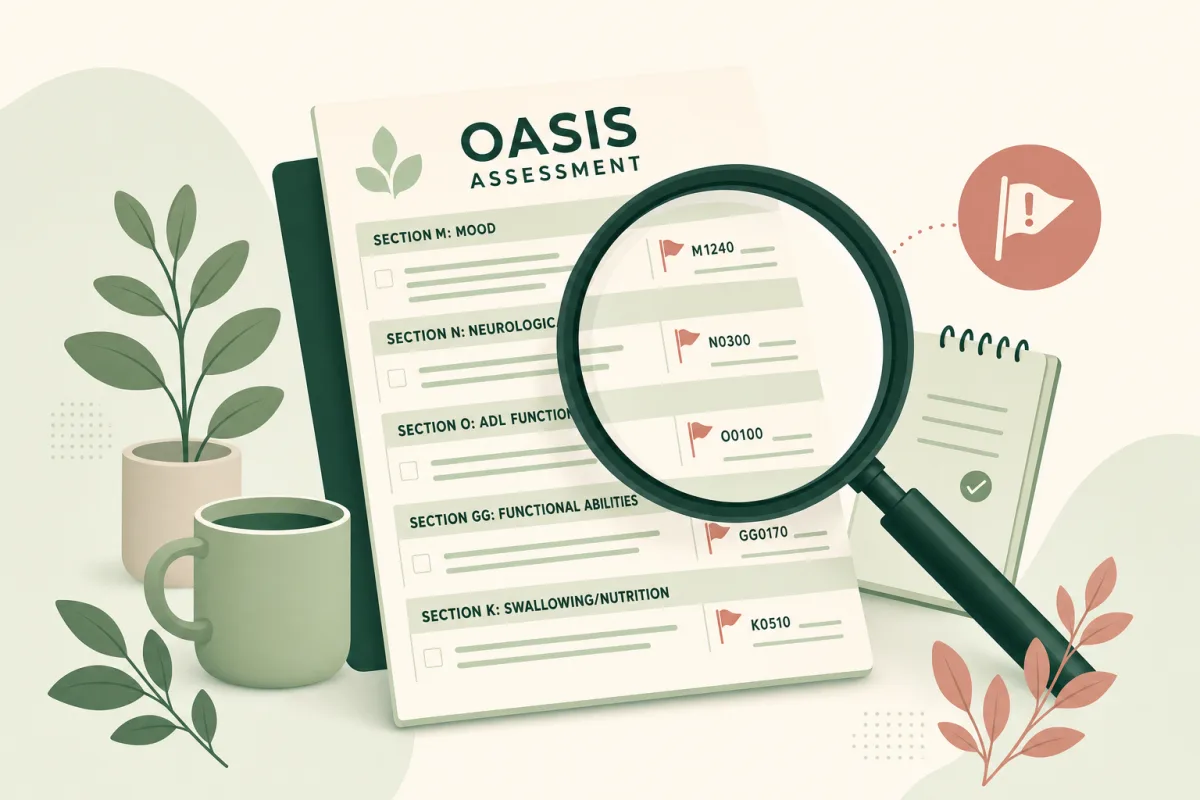
Training remains the foundation of hospice compliance. OASIS Answers, for example, offers HOPE training, the INSTANT HOPE reference book, quarterly CMS update webinars, and the CHS-C exam, a HOPE credential.
Compliance strengths:
- HOPE item-by-item training for clinicians
- A HOPE credential for your HOPE leads
- Regular updates on CMS guidance changes
Considerations:
- Education, not technology
- Training alone does not catch individual documentation errors
6. Outsourced Hospice Compliance Review, Best for Audit Preparation
Best for: Agencies preparing for surveys or responding to compliance concerns
Consulting firms offer outsourced hospice compliance review, including mock surveys, documentation audits, and compliance program assessments.
Compliance strengths:
- Mock surveys simulating the CMS survey process
- Chart audits for documentation completeness and accuracy
- Corrective action plan guidance
Considerations:
- Per-engagement pricing
- Point-in-time review, not continuous monitoring
- Quality depends on the reviewing team
Building a Hospice Compliance Program
Effective hospice compliance needs layers, not a single tool:
- Documentation quality makes every visit note support medical necessity, recertification, and the plan of care
- Operational tracking manages benefit periods, face-to-face encounters, HOPE timepoints, and the 30-day HOPE submission window
- Quality analytics monitors trends and benchmarks performance against peers
- Staff education builds the knowledge everything else depends on
- Periodic review gives you outside validation of your compliance posture
The most prepared agencies combine continuous visit-note QA with periodic expert review. Use the hospice recertification checklist to spot-check each benefit period.
Hospice Compliance Resources
- HOPE Assessment Requirements, HUV timing, submission deadlines, and FY2027 rule changes
- Hospice Recertification Checklist, What each recertification needs on file
- Hospice Recertification Narratives, Write narratives that withstand audit scrutiny
- Hospice Documentation Best Practices, Strengthen your overall documentation program
- Sentinel QA, Automated QA for every home health and hospice visit note
- Best AI Documentation Tools for Hospice, HOPE, IDG, and CTI documentation compared across AI platforms