Best AI Documentation Tools for Hospice (2026)
The best AI documentation tools for hospice agencies in 2026: HOPE assessment support, IDG notes, CTI narratives, and recertification, compared honestly.
Lime Health Team
Lime Health AI

Hospice documentation is its own discipline: HOPE assessments (required since October 1, 2025), IDG meeting notes, certification of terminal illness (CTI) narratives, recertification under tightening auditor scrutiny, and election and benefit-period paperwork. Most “AI medical scribe” tools were built for physician office visits and handle none of this. Here is what works for hospice in 2026.
What hospice documentation AI must handle
Before comparing tools, the checklist. A scribe writing only narrative encounter notes solves the smallest part of the problem:
- HOPE assessments at admission, HOPE Update Visits, and discharge, with the 90% submission threshold protecting your annual payment update
- IDG documentation reflecting the interdisciplinary team’s discussion
- CTI and recertification narratives supporting terminal prognosis with specific, defensible clinical evidence
- Compliance defense: hospice ADR volume keeps rising, and documentation is the whole case
- Hospice EMR integration: notes must land in platforms like Axxess, MatrixCare, Netsmart, WellSky, HCHB, or DSL, not Epic
1. Lime Health AI, best purpose-built hospice AI documentation
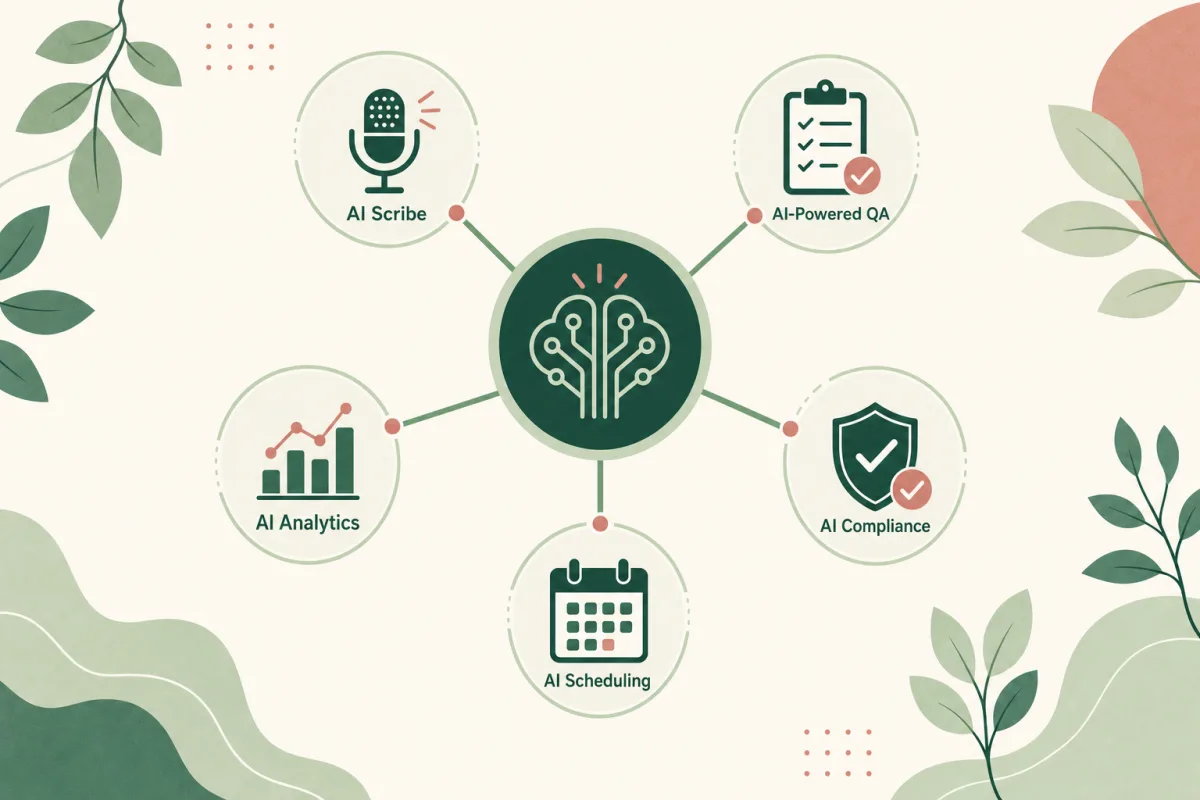
Lime is built for post-acute care. The ambient scribe listens during the visit and drafts the structured documentation hospice requires: HOPE assessment items, visit notes, IDG-ready summaries, and recertification support, with ICD-10 coding suggestions. Notes and codes sync to your EMR. Documentation time drops by 75%, and clinicians stop charting after hours.
Strengths: full HOPE support instead of narrative notes alone, AI ICD-10 code suggestions, sync with the major hospice EMRs, and per-chart volume pricing with pilots available. Considerations: post-acute only. Not built for clinics or hospitals.
2. Embedded EMR scribes, convenient but early
If your agency runs on HCHB or WellSky, both now ship embedded AI: Curate: Scribe (HCHB, March 2026) and WellSky Scribe (late 2025). They draft notes and transcribe visits inside the EMR you already use. Genuinely useful, with zero integration friction.
Strengths: no new vendor, drafting inside existing workflows. Considerations: transcription and drafting first. Structured HOPE completion, coding, and verification remain manual. Locked to one EMR. Hospice-specific artifacts (CTI narratives, IDG synthesis) are not the focus.
3. General ambient scribes, strong products, wrong setting
Abridge, Ambience, Microsoft Dragon Copilot, Suki, and DeepScribe lead the physician-encounter market (see our ambient documentation companies overview). They produce excellent narrative notes for clinic and hospital visits. For hospice they share the same gaps: no HOPE assessment structure, no hospice EMR integrations, no benefit-period awareness, and per-provider pricing designed for full-schedule physicians rather than field teams.
Use them if your hospice physicians also run clinic practices and need encounter notes there. Not as the agency documentation solution.
Comparison at a glance
| Tool | HOPE support | Hospice EMR sync | CTI/recert help |
|---|---|---|---|
| Lime Health AI | Full assessment drafting | Axxess, MatrixCare, Netsmart, WellSky, HCHB, DSL | Yes |
| HCHB Curate: Scribe | Draft notes only | HCHB only | No |
| WellSky Scribe | Field population + voice assist | WellSky only | No |
| General scribes (Abridge, Ambience, DAX, Suki) | No | No | No |
How to choose
- Start from HOPE, not from notes. Since October 2025, HOPE compliance carries a 4% payment penalty risk. A tool skipping HOPE items leaves your biggest burden untouched.
- Audit-proof the output. Ask every vendor how a drafted recertification narrative holds up in an ADR: what clinical evidence gets captured, and who verifies the output.
- Pilot with your own IDG cycle. One benefit period, real patients (with consent workflows), measured before-and-after documentation time. Most agencies know within two weeks.
Hospice documentation AI in 2026 splits into purpose-built platforms, embedded EMR drafting, and physician scribes without hospice fit. Match the tool to the documentation you are required to produce.
Related: Best Hospice Software 2026 buyer’s guide and hospice CTI and recertification narrative examples.