Best PDGM Optimization Tools for Home Health in 2026
PDGM optimization tools for home health compared for 2026: AI documentation and coding, OASIS QA, benchmarking, Mosai analytics, and outsourced coding.
Lime Health Team
Lime Health AI
Updated October 2026: we corrected how PDGM assigns the clinical group (the claim’s principal diagnosis) and functional level (OASIS M1800-M1860 plus M1033, not Section GG), added the CY2026 final rule and CY2027 proposed rule, renamed Medalogix to Mosai, removed an incorrect SimiTree history note, and removed vendor features we could not verify.
Why PDGM Optimization Matters
The Patient-Driven Groupings Model sets Medicare payment for every 30-day home health period. Each period lands in one of 432 case-mix groups built from five factors:
- Clinical group, from the principal diagnosis on the claim
- Functional impairment level, from OASIS items M1800-M1860 plus M1033 (risk of hospitalization)
- Comorbidity adjustment, from secondary diagnoses on the claim
- Admission source, community or institutional
- Timing, early (first 30-day period) or late
Section GG does not set the PDGM functional level. GG feeds quality measures and Home Health Value-Based Purchasing. The M1021 primary diagnosis on the OASIS should match the claim.
Rates are moving too. The CY2026 final rule cut aggregate home health payments by an estimated 1.3%, with a -1.023% permanent adjustment and a -3.0% temporary adjustment. The CY2027 proposed rule would raise aggregate payments 2.4%, with no new permanent adjustment and another -3.0% temporary adjustment. The CY2027 final rule had not been published as of October 6, 2026. With temporary adjustments still reducing rates, each period coded or scored wrong costs more.
Agencies with documentation gaps, coding errors, or OASIS inaccuracies either leave money on the table or create compliance risk. The right tools help you get both payment and compliance right. See our PDGM guide for the full model.
1. Lime Health AI, Best All-in-One PDGM Documentation
Best for: Agencies wanting documentation, coding suggestions, and OASIS QA in one platform
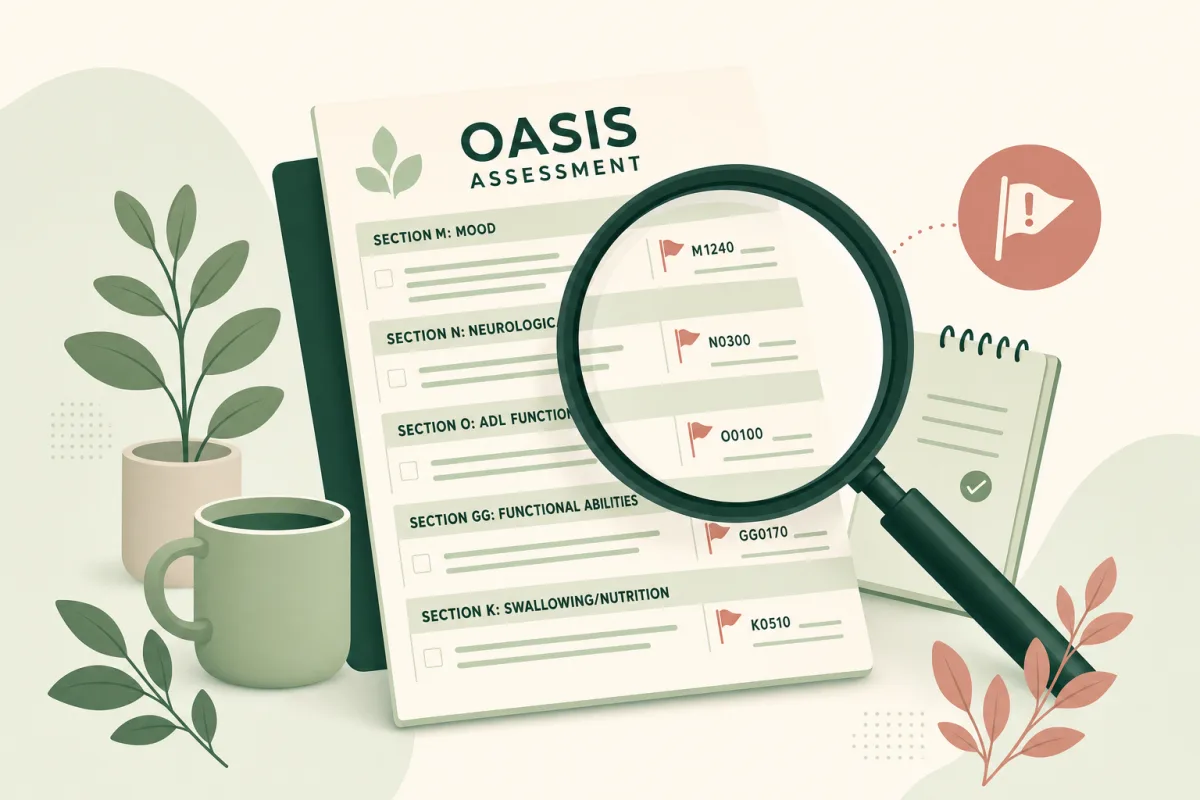
Lime addresses PDGM at the source: clinical documentation. OASIS Scribe drafts visit notes and OASIS responses from the visit conversation, with the diagnosis detail and functional observations PDGM depends on. The clinician reviews and confirms every draft. ICD-10 coding suggestions flag documented comorbidities for your coders to confirm, and OASIS review flags responses contradicting the clinical record and surfaces their PDGM payment impact.
PDGM impact:
- Flags documented comorbidities missing from the code set, for coder review
- OASIS QA flags M1800-M1860 and M1033 responses the visit documentation does not support
- Drafted notes carry the diagnosis specificity and functional detail coding depends on
- Checks the M1021 primary diagnosis against the documentation
- 75% reduction in documentation time and 95% documentation accuracy, per Lime
Considerations:
- Documentation, coding, and QA platform, not a benchmarking or analytics tool
- Focused on post-acute care settings
- Your clinicians and coders make the final call on every response and code
2. Strategic Healthcare Programs (SHP), Best Benchmarking
Best for: Agencies focused on comparing performance against peers
SHP provides benchmarking and analytics for home health and hospice agencies, plus HHCAHPS and CAHPS Hospice survey administration with national benchmarks. Benchmarking shows where your agency’s patterns differ from peers, which points you to the documentation areas worth a closer look.
PDGM impact:
- Comparison against state and national peers
- Trend tracking over time
- Patient experience survey data alongside operational data
Considerations:
- Benchmarking and reporting platform, identifies trends but does not fix documentation
- Ask which case-mix and PDGM reports your subscription includes
- Requires separate tools for documentation improvement and coding
3. Outsourced Coding Services (SimiTree, WellSky, McBee), Best for Outsourced PDGM Coding
Best for: Agencies outsourcing coding and wanting PDGM-focused expertise
Several firms provide outsourced coding and OASIS review for home health. SimiTree offers coding, OASIS review, QAPI, consulting, and education, and markets SARA, an AI-powered coding and OASIS tool. WellSky’s coding services use certified coders and include diagnosis coding, OASIS review, and plan of care assessment. McBee, owned by Netsmart, offers OASIS accuracy and coding services and PDGM consulting.
PDGM impact:
- Coders trained on PDGM classification rules
- Comorbidity review for PDGM adjustments
- OASIS review alongside coding
- Consulting on documentation practices
Considerations:
- Outsourced model adds turnaround time between documentation and final codes
- Per-chart costs scale with census
- Results depend on the quality of the assigned coding team
For a buyer’s checklist, see home health coding services.
4. Mosai (formerly Medalogix), Best Predictive Analytics
Best for: Agencies using predictive models to guide visit utilization
Medalogix and Forcura rebranded as Mosai on October 29, 2025. Mosai’s Clinical Management products carry the predictive analytics. Pulse provides visit-level risk scoring and utilization alerts. Transitions supports timely hospice transitions with predictive insights.
PDGM impact:
- Visit-level risk scoring to guide utilization within 30-day periods
- Utilization alerts for at-risk patients
- Predictive support for hospice transitions
- Integrations with HCHB, MatrixCare, WellSky, Axxess, and AlayaCare
Considerations:
- Focused on predictive analytics and utilization, not documentation or coding
- Requires integration with your EMR for full functionality
- Best as a complement to documentation and coding tools
5. PDGM-Focused Consulting Services, Best for Strategic Guidance
Best for: Agencies with systematic PDGM performance issues needing an outside assessment
Several consulting firms offer PDGM assessments. They analyze your documentation patterns, coding accuracy, and OASIS data to find systemic issues affecting payment. This approach fits agencies suspecting structural problems rather than individual errors.
PDGM impact:
- PDGM performance assessment
- Documentation practice review and recommendations
- Staff education on PDGM-relevant documentation
- Benchmarking against industry standards
Considerations:
- Consulting engagements are often expensive
- Recommendations still require execution by your team
- Results depend on the quality of the consulting firm
Choosing the Right Approach
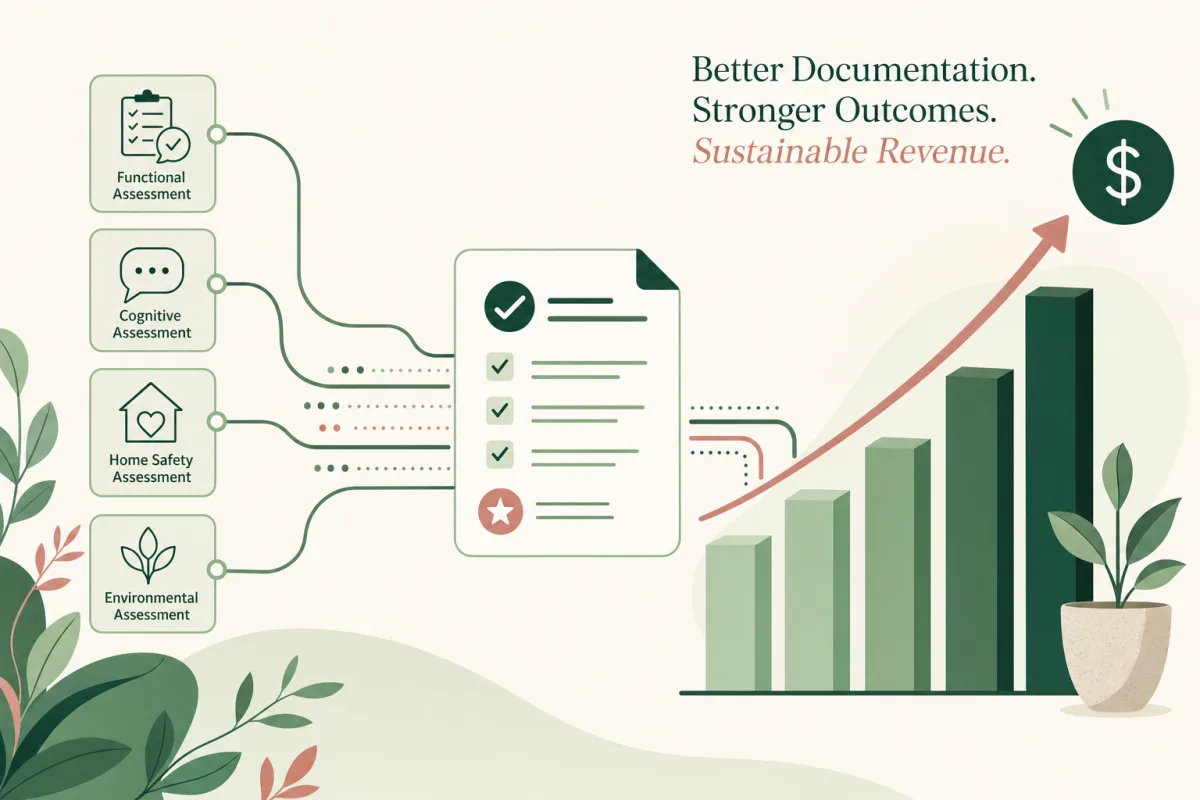
PDGM optimization is a workflow, not a single tool. The most effective agencies combine:
- Documentation quality at the point of care, so clinical notes carry the specificity coding and OASIS depend on
- Coding accuracy, with a principal diagnosis matching the documentation and every supported comorbidity captured
- OASIS QA, confirming M1800-M1860 and M1033 responses match the visit documentation
- Analytics, monitoring trends and benchmarking against peers
Tools covering several layers (documentation, coding, and QA together) reach further than point solutions covering one.
PDGM Optimization Resources
- PDGM Guide, How the model groups and pays each period
- PDGM Documentation Strategies, How to document for accurate PDGM classification
- OASIS M1800-M1860 ADL Items, The items behind the functional level
- ICD-10 Coding Best Practices, Improve coding accuracy for PDGM
- AI vs. Outsourced Coding, Compare coding approaches