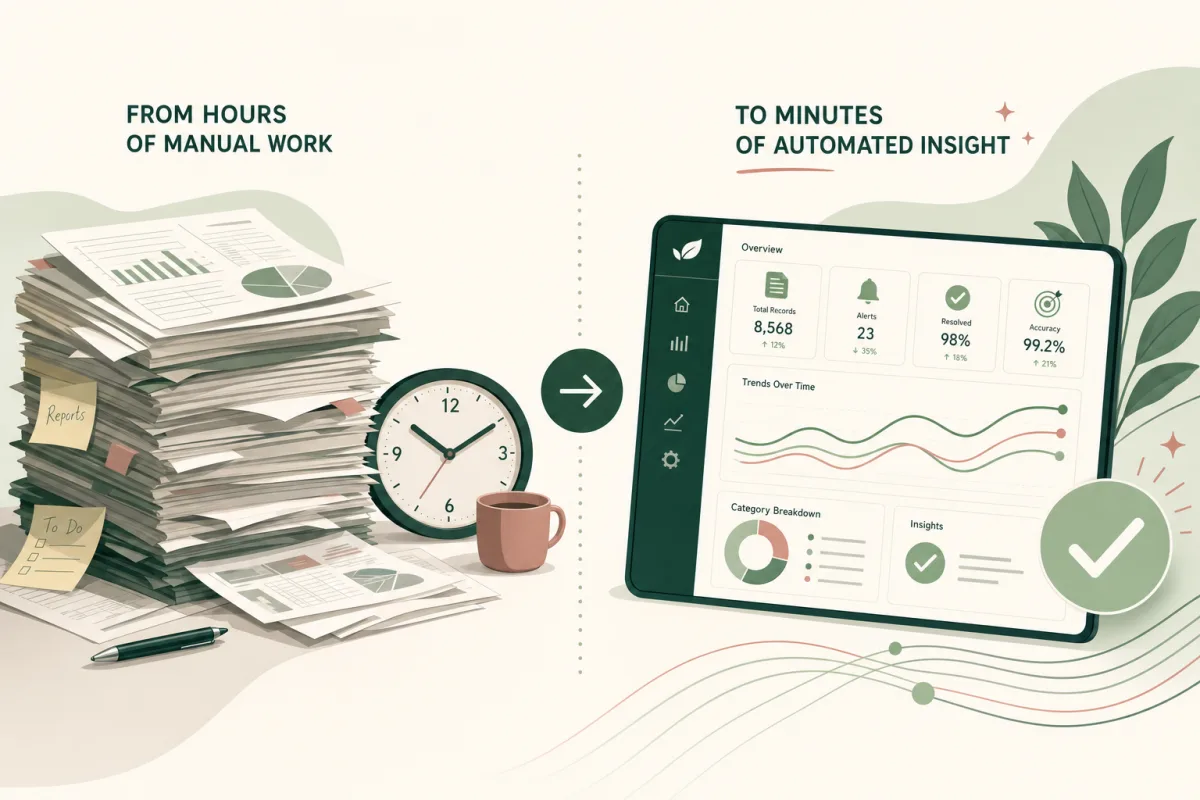
AI vs. EMR-Only Workflows: Why Your EMR Isn't Enough
EMR systems are essential but limited. Learn where EMR-only documentation workflows fall short and how AI tools fill the gaps in home health and hospice.
Lime Health Team
Lime Health AI
EMRs Are Necessary but Not Sufficient
Every home health and hospice agency runs on an electronic medical record system. Whether it is HCHB (Homecare Homebase), WellSky, MatrixCare, Axxess, or another platform, the EMR is the operational backbone — managing patient records, scheduling, billing, and regulatory submissions.
But there is a growing gap between what EMR systems were designed to do and what agencies need them to do. EMRs are built for data storage and workflow management. They were not designed to create clinical documentation, ensure OASIS accuracy, optimize coding, or reduce clinician documentation burden. Expecting your EMR alone to solve these problems leaves significant gaps in documentation quality and efficiency.
What EMRs Do Well
EMR systems excel at structured data management. They provide standardized fields for patient demographics, care plans, orders, and assessment data. They manage scheduling, track authorizations, and handle claim submission. For regulatory compliance, they ensure that required forms exist and that data flows to CMS in the correct format.
Good EMR systems also provide reporting and analytics. Census dashboards, billing reports, and quality measure tracking give agency leaders visibility into operational performance.
These are critical capabilities. No agency can operate without them. The question is not whether you need an EMR — you do. The question is whether your EMR alone is sufficient for clinical documentation quality.
Where EMR-Only Workflows Fall Short
The limitations of EMR-only documentation become apparent when you examine what happens at the point of care.
No ambient capture — EMR systems require manual data entry. Clinicians must type, tap, or click their way through documentation screens, either during the visit (which takes attention away from the patient) or after the visit (which introduces the memory and accuracy problems of delayed documentation). EMRs do not listen to the clinical encounter or capture information automatically.
Template-driven, not intelligence-driven — EMR documentation templates provide structure but not guidance. They ensure fields exist but do not help clinicians complete them accurately. A template with a homebound status field does not help the clinician articulate a strong homebound rationale. A functional assessment section does not verify that the scores align with clinical observations documented elsewhere in the chart.
Limited real-time QA — While EMRs include basic edit checks and required field validation, they do not perform intelligent cross-referencing across the chart. If a clinician scores a patient as independent in ambulation but documents unsteady gait requiring a walker in the visit narrative, the EMR records both without flagging the contradiction. Errors flow downstream to OASIS submission, clinical grouping, and reimbursement without intervention.
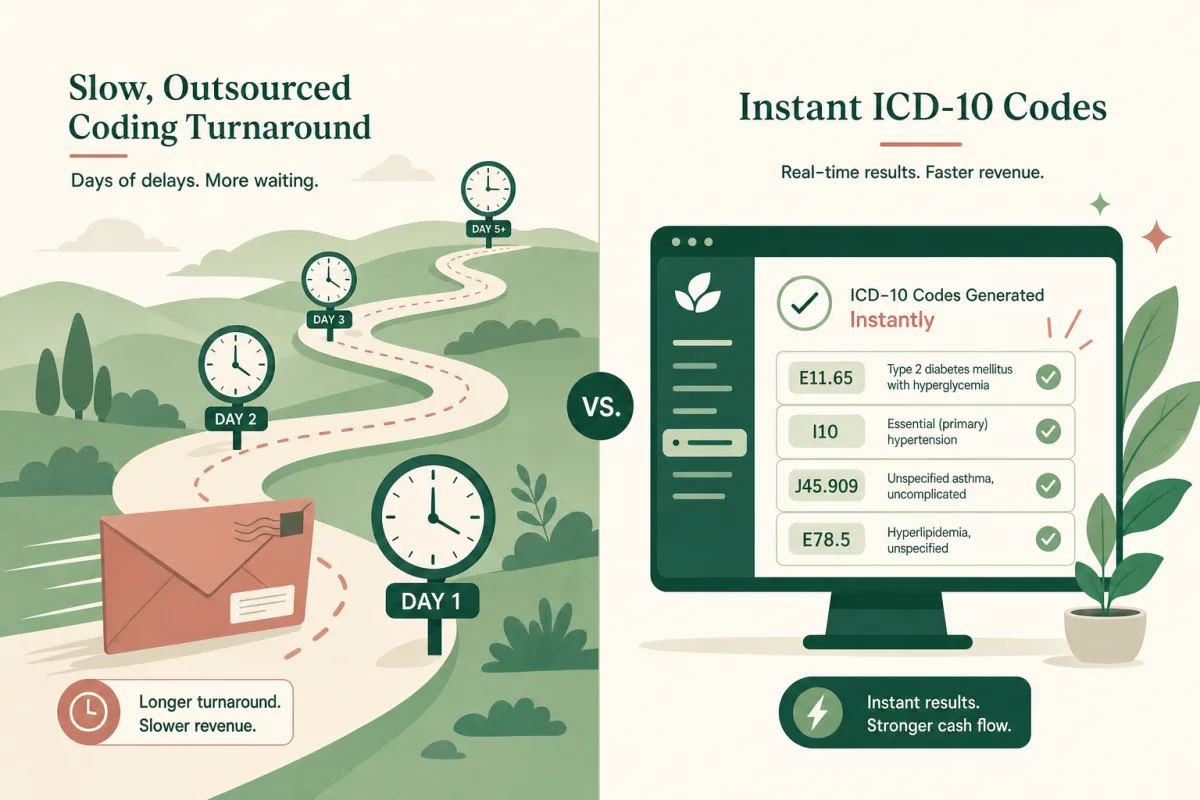
Limited coding intelligence — While some EMRs include basic code lookup functionality, they do not analyze clinical documentation to suggest optimal ICD-10 codes, identify missed comorbidities, or flag sequencing issues. Coding accuracy depends entirely on the clinician’s or coder’s expertise, with no AI assistance.
No documentation generation — Perhaps the most significant limitation: EMRs do not create documentation. They provide the container, but the clinician must produce the content. This is the fundamental source of the documentation burden that drives burnout, after-hours charting, and quality issues across the industry.
How AI Fills the Gaps
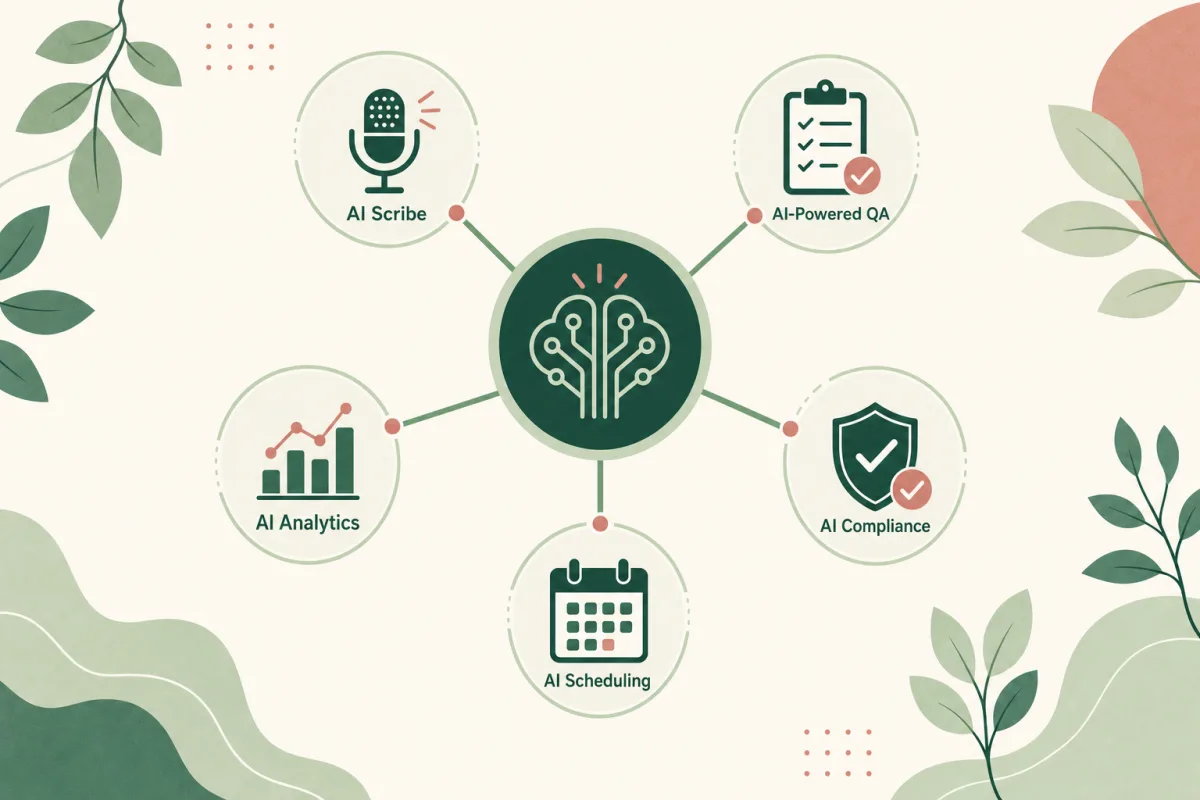
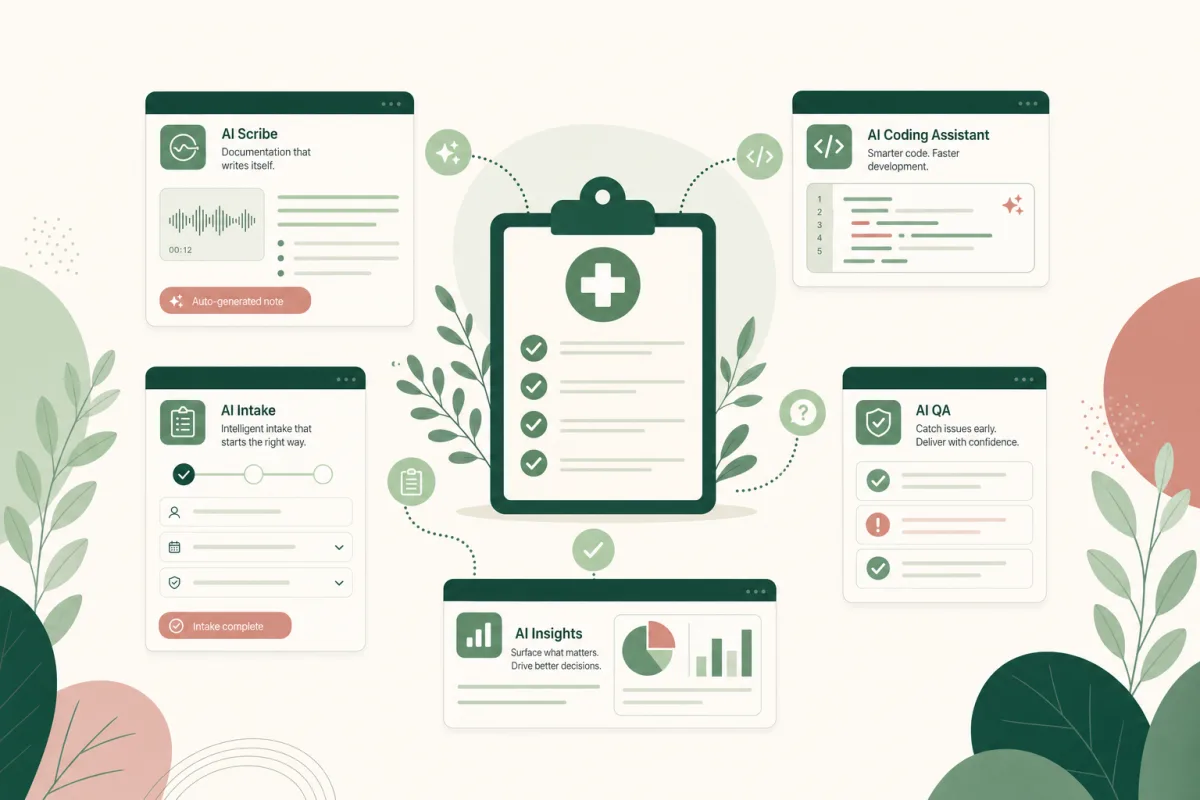
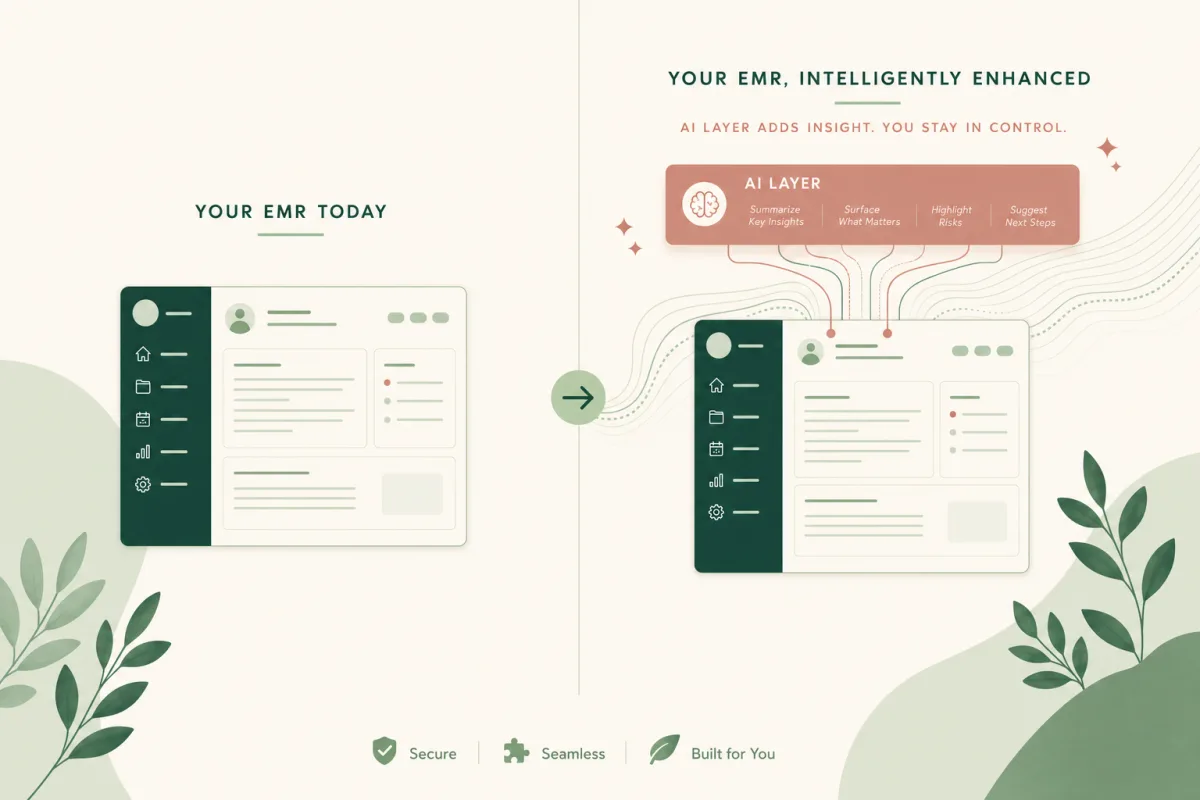
AI-powered documentation tools are designed to work alongside your EMR, not replace it. They address the specific limitations that EMR-only workflows cannot solve.
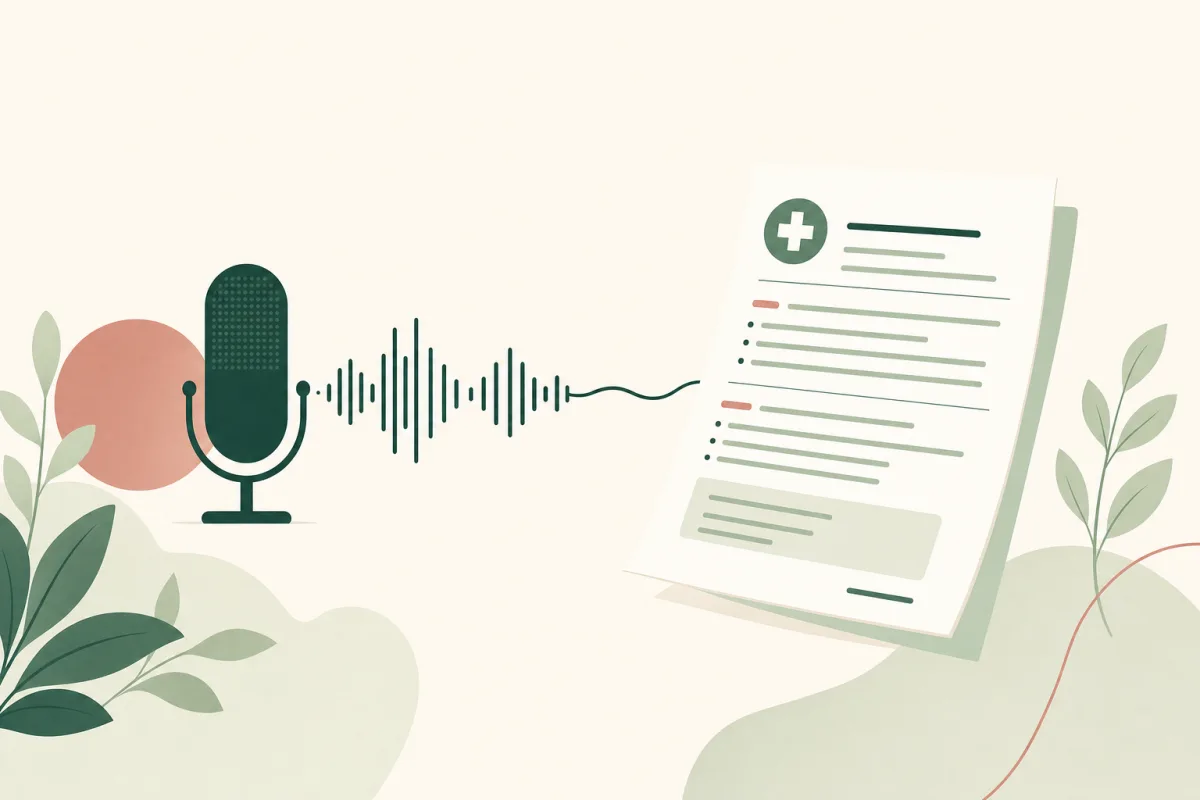
Ambient documentation captures the clinical encounter through voice recording and automatically generates structured clinical notes. Instead of typing notes after the visit, clinicians review and approve AI-generated documentation that reflects what actually happened during the patient interaction.
Intelligent QA cross-references every piece of documentation against OASIS responses, clinical findings, and compliance requirements. Contradictions and gaps are flagged in real time, before the documentation is finalized — not discovered weeks later during retrospective review.
AI-powered coding analyzes clinical documentation and suggests appropriate ICD-10 codes with supporting evidence from the clinical record. This does not replace clinical judgment but provides a starting point that improves accuracy and efficiency.
OASIS and HOPE support helps clinicians complete assessments accurately by connecting assessment items to supporting clinical evidence, flagging potential inconsistencies, and ensuring that documentation supports each response.
The Integration Question
A common concern is whether adding AI tools creates workflow complexity. If clinicians have to work in two systems — the EMR and a separate AI tool — the benefit may be offset by the friction.
This is a valid concern, and the answer depends on the integration model. AI documentation tools that offer native EMR connectors can push completed documentation, codes, and assessment data into the EMR workflow — though the depth of integration varies by vendor and platform. Clinicians interact with the AI tool during the visit and find completed documentation in their EMR afterward.
Native EMR integration means the AI tool enhances the EMR workflow rather than competing with it. The EMR remains the system of record. The AI tool makes the content that goes into it better, faster, and more accurate.
Making the Case for AI + EMR
The decision to supplement your EMR with AI documentation tools should be evaluated on specific, measurable outcomes. How much time do your clinicians spend on after-hours documentation? What is your OASIS accuracy rate? How many claims are denied for documentation deficiencies? What is your clinician turnover rate, and how much of it is driven by documentation burden?
For most agencies, the answers to these questions make a clear case. EMR systems are essential infrastructure, but they were not designed to solve the documentation quality and efficiency challenges that agencies face today. AI tools purpose-built for these challenges deliver measurable improvements that EMR-only workflows cannot match.
Compare AI + EMR Solutions
- Lime vs. HCHB — How AI documentation compares to HCHB’s built-in tools
- Lime vs. WellSky — AI-powered documentation alongside WellSky workflows
- EMR Integration Guide — How AI tools integrate with your existing EMR
- AI Scribe for Home Health — See how ambient documentation works in practice