
Best Clinical Documentation Software (2026)
The category split three ways in 2026: ambient AI scribes, structured assessment tools, and coding-and-QA platforms. The best choice depends on your care setting. Here is the honest breakdown.
The Short Answer
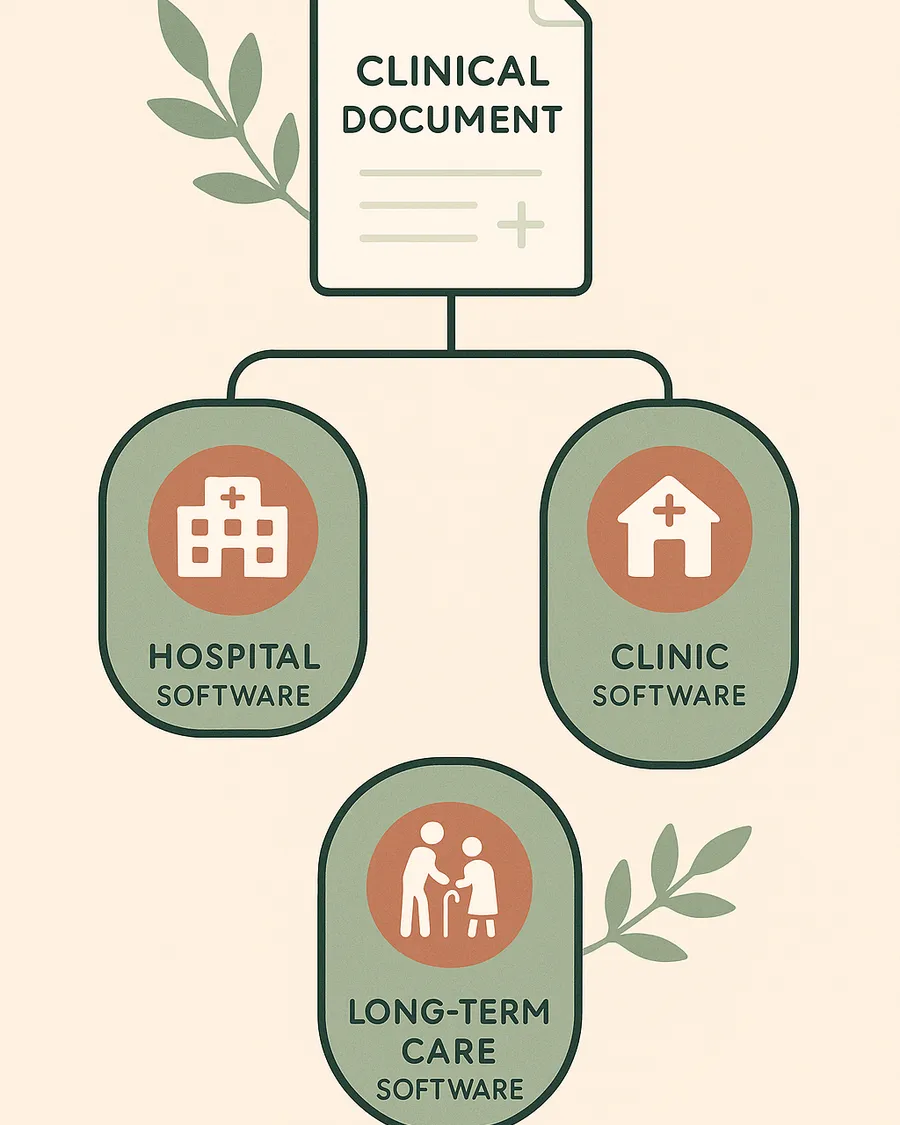
The best clinical documentation software in 2026 depends on your setting: Abridge, Ambience, and Microsoft Dragon Copilot lead for health systems, Suki, DeepScribe, and Freed for ambulatory practices, and Lime Health AI for home health and hospice. Match the tool to the documentation you actually produce: narrative encounter notes, or structured assessments like OASIS-E2 and HOPE with coding and QA.
Clinical Documentation Software at a Glance
Reported positioning as of July 2026. Confirm current pricing with each vendor.
| Platform | Best for | What it produces | Coding & verification |
|---|---|---|---|
| Lime Health AI | Home health & hospice | OASIS-E2, HOPE, visit notes, ICD-10 | AI coding suggestions and QA flags, no human sign-off |
| Abridge | Health systems (Epic) | Narrative encounter notes | No verification layer |
| Ambience Healthcare | Health systems (Epic Toolbox) | Notes plus coding support (AutoCDI) | Automated CDI, no human sign-off |
| Microsoft Dragon Copilot (Nuance DAX) | Physicians, ambulatory & hospital | Narrative encounter notes | No verification layer |
| Suki / DeepScribe / Nabla | Ambulatory & specialty practices | Narrative notes, some coding suggestions | No human verification |
| Freed | Individual clinicians | Narrative notes | No verification layer |
Choosing by Care Setting
Health systems and hospitals: the shortlist is Abridge, Ambience, and Microsoft Dragon Copilot. All three are built for Epic-centric enterprise deployment, and the decision comes down to integration depth, specialty coverage, and negotiated price. See our Nuance DAX pricing breakdown and Ambience pricing guide.
Ambulatory practices and specialists: compare Suki, DeepScribe, Nabla, and Freed on specialty fit and price. Reported 2026 pricing runs from about $99 to $399 per provider per month. The ambient documentation companies list covers the full field.
Home health and hospice agencies: the physician-encounter scribes above generate narrative notes, not the structured assessments your clinicians spend their time on. Agency documentation centers on OASIS-E2 for home health, HOPE for hospice, PDGM-linked ICD-10 coding, and CMS audit defense. That is what Lime Health AI is built for.
The Verification Gap
Most clinical documentation software stops at generation. The AI drafts the note, and the treating clinician reviews it. That works for narrative encounter notes where the clinician is the only accountable party. It works less well for payment-linked documentation, where a coding error changes reimbursement and an inconsistency invites an audit. Lime narrows that gap: the AI drafts OASIS-E2, HOPE, and ICD-10 output, flags inconsistencies, missing data points, and potentially incorrect codes, and helps your QA reviewers and coders correct them before they affect reimbursement or compliance. Documentation time still drops by 75%.
How to Choose
- Match the output to your setting. Narrative notes for physician encounters, structured assessments for post-acute. A tool built for one rarely fits the other.
- Check EMR integration. Epic-deep scribes do not operate in HCHB, WellSky, Axxess, or MatrixCare.
- Ask how errors get caught. For payment-linked documentation, catching coding and assessment errors before submission is the difference between speed and risk.
- Price against your volume. Per-provider pricing suits salaried physicians. Per-chart pricing suits agencies with part-time and per-visit field staff.
For the post-acute deep dive, see the 11-scribe comparison and the 2026 home health software guide. For the adjacent categories, see our 2026 vendor lists for ambient documentation companies, AI medical coding companies, home health QA software, and AI intake automation companies.
FAQ
Clinical Documentation Software, Answered
What buyers ask when comparing documentation platforms.
Clinical documentation software is any tool that helps clinicians create, structure, and verify the record of a patient encounter. In 2026 the category spans three types: ambient AI scribes that generate notes from the visit conversation, structured documentation and assessment tools built into EMRs, and clinical documentation improvement (CDI) tools that review notes for completeness and coding accuracy. The best platforms combine capture, structure, and verification in one workflow.
It depends on your setting. For health systems and physician practices, Abridge (Best in KLAS 2025 and 2026), Ambience, and Microsoft Dragon Copilot lead the ambient scribe market. For ambulatory and specialty practices, Suki, DeepScribe, Nabla, and Freed compete on workflow and price. For home health and hospice, Lime Health AI is purpose-built: it generates OASIS-E2 and HOPE assessments, ICD-10 coding, and visit notes, with AI QA flags that help your team correct errors before submission.
Ambient scribes mostly price per provider per month, with reported 2026 figures from roughly $99 (Freed) to $600+ (enterprise platforms), before implementation fees. Some vendors quote annual per-clinician licenses (Abridge is reported around $2,500 per clinician per year). Lime Health AI uses per-chart volume pricing, which fits agencies whose documentation volume, not headcount, drives cost.
Some do, most do not. Pure ambient scribes generate the narrative note and leave coding to the clinician or a downstream coder. Platforms built for payment-linked documentation include coding: Lime Health AI suggests ICD-10 codes from clinician notes and flags missing or potentially incorrect codes, which matters most where documentation drives reimbursement, like PDGM in home health.
Five things: whether it produces the documentation your setting actually requires (narrative notes vs. structured assessments like OASIS-E2 and HOPE), whether it integrates with your EMR, how it catches errors before submission, how it prices relative to your volume, and how fast it returns usable documentation. Match the tool to your documentation burden, not to the loudest brand.
Run home health or hospice? See the documentation platform built for your setting.
Request a Demo