What Changed in OASIS-E2: A Home Health Guide
OASIS-E2 is the 2026 CMS update to OASIS. What changed from OASIS-E1, Section GG, SDOH, cognitive items, and PDGM payment impact.
Lime Health Team
Lime Health AI
OASIS-E2 Is Here. What Actually Changed?
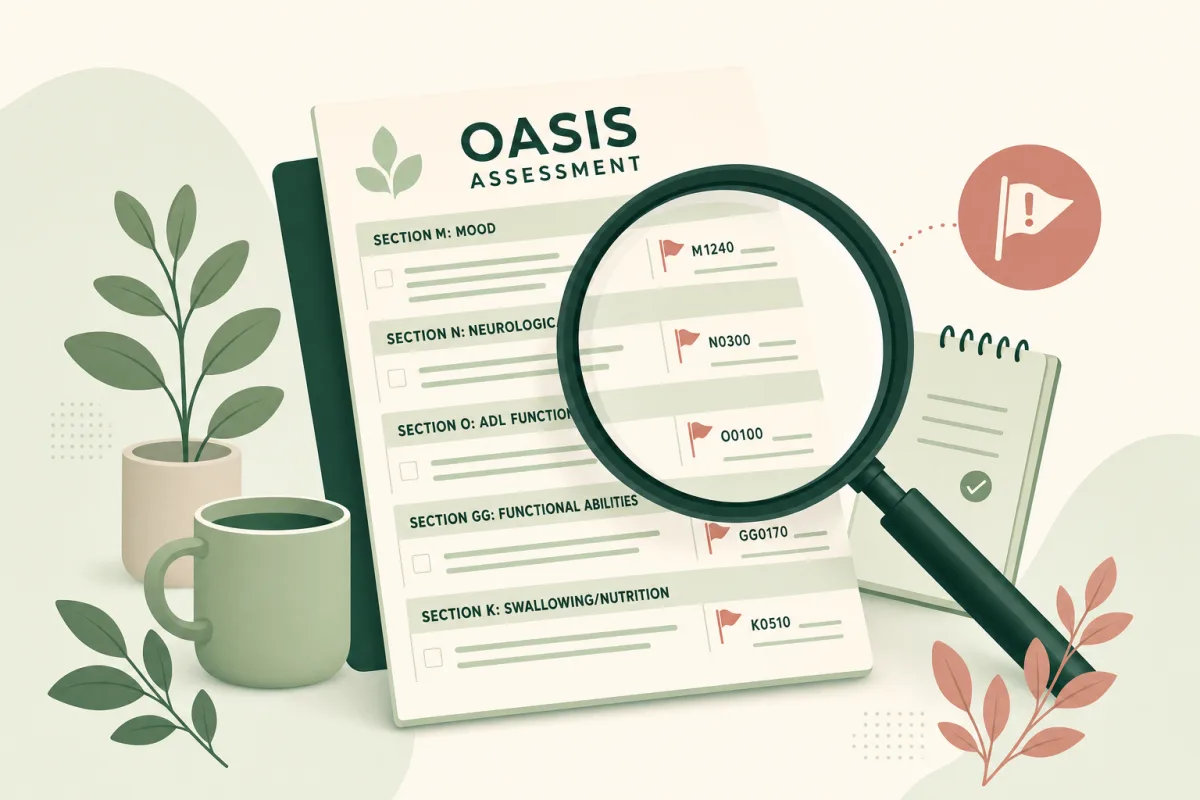
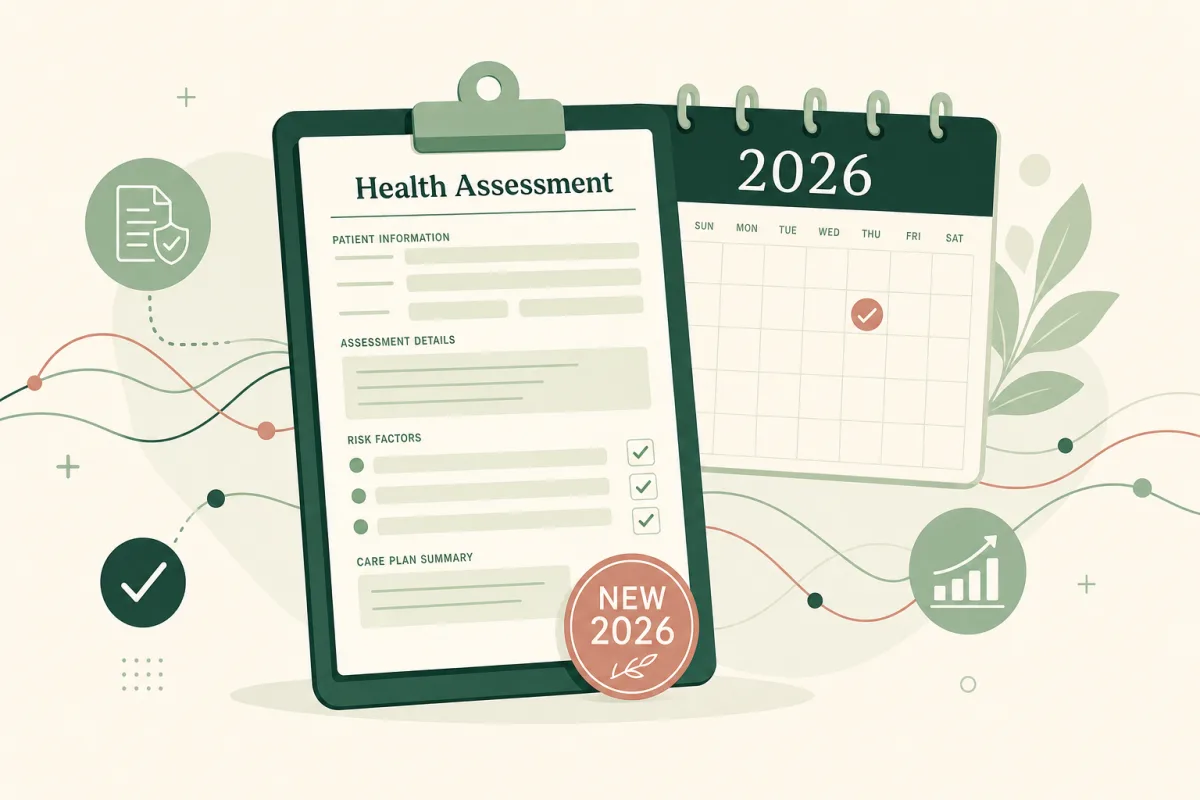
OASIS-E2 is the latest version of the Outcome and Assessment Information Set, released by CMS for Medicare-certified home health agencies. It builds on OASIS-E (effective January 1, 2023) and OASIS-E1 (effective January 1, 2025), refining how clinicians capture functional, cognitive, and Social Determinants of Health (SDOH) data during the patient assessment.
If you’ve already implemented OASIS-E1, the good news is that OASIS-E2 is iterative, not a wholesale rewrite. Your existing workflows, EMR forms, and QA processes need updates, but you don’t need to rebuild from scratch. The structural framework, five required time points (SOC, ROC, Recertification, Transfer, Discharge), M-item architecture, Section GG functional assessment, and PDGM payment mapping, is preserved.
This guide walks through what actually changed, what didn’t, and what your agency should do in the first 90 days. For the complete authoritative reference, see the What Is OASIS-E2 hub guide and the item-by-item OASIS-E2 changes page.
What Stayed the Same
Before diving into changes, recognize what didn’t change. OASIS-E2 preserves:
- Five required time points: Start of Care (SOC), Resumption of Care (ROC), Recertification, Transfer to Inpatient Facility, and Discharge
- M-item structure across clinical, functional, and service utilization domains
- Section GG framework for functional self-care and mobility assessment
- PDGM payment mapping, clinical group, functional impairment level, comorbidity adjustment
- Home Health Quality Reporting Program (HH QRP) submission via iQIES
- Star Ratings methodology
- Conditions of Participation compliance requirements
This is good news for change management. Your clinicians already know the OASIS workflow. OASIS-E2 is a refinement, not a reinvention.
What Changed: The 5 Categories of Updates
1. Section GG (Functional Assessment) Refinements
Section GG continues to be the cornerstone of post-acute care standardization under the IMPACT Act. OASIS-E2 introduces refinements to:
- Item definitions for self-care and mobility scoring
- Admission Performance vs. Discharge Goal vs. Discharge Performance documentation guidance
- “Activity not attempted” coding rules
- Continued cross-setting harmonization with SNF (MDS), IRF (IRF-PAI), and LTCH (LTCH CARE) functional items
Why this matters for payment: Section GG drives the functional impairment level (Low / Medium / High) under PDGM. Even a one-level shift can change reimbursement by hundreds of dollars per 30-day period. Agencies should weight Section GG retraining heavily during the OASIS-E2 transition.
2. Cognitive and Behavioral Item Updates
OASIS-E introduced standardized cognitive items (BIMS, Brief Interview for Mental Status), mood items (PHQ-2/9), and behavioral indicators. OASIS-E2 continues to refine these items, with potential updates to:
- BIMS administration and scoring guidance
- PHQ depression screening item definitions
- Behavior frequency and impact items
- Cognitive status documentation standards
These items feed Star Ratings quality measures and increasingly inform care planning, especially for patients with comorbid mental health conditions or dementia.
3. Social Determinants of Health (SDOH) Expansion
SDOH data collection has been a CMS priority since OASIS-E. OASIS-E2 continues this expansion, potentially including refined items covering:
- Housing stability and homelessness risk
- Food security
- Transportation access
- Health literacy
- Social isolation and support network
Clinician training implication: SDOH items require sensitive interviewing technique. Many clinicians have never been trained on how to ask SDOH questions in a way that elicits accurate responses without making patients defensive. Plan dedicated SDOH training as part of your OASIS-E2 rollout, not as an afterthought.
4. SPADE Alignment and Cross-Setting Standardization
Standardized Patient Assessment Data Elements (SPADEs) are CMS’s mechanism for collecting the same data across home health, SNF, IRF, and LTCH. OASIS-E2 continues SPADE alignment, which makes patient outcomes comparable across post-acute providers and feeds value-based purchasing programs.
5. Updated CMS Guidance Manual
The OASIS-E2 Guidance Manual supersedes the OASIS-E1 manual for all assessments completed on or after the effective date. Your QA team should download the latest version, distribute to all clinical staff, and update internal SOPs.
For a side-by-side breakdown of every change, see the OASIS-E1 vs OASIS-E2 comparison guide.
What QA Teams Need to Update
Beyond clinician training, your QA workflow needs explicit updates:
- QA rule sets for new or refined items
- Scoring consistency checks for updated GG items
- Documentation-to-OASIS cross-validation logic, the single most common audit citation is OASIS responses inconsistent with clinical documentation
- SDOH response completeness checks, agencies that allow SDOH items to be skipped without justification face higher audit risk
- EMR form configuration alignment with the new item set
For automated QA that adapts to OASIS-E2 changes without rule rewrites, see Lime’s AI-powered OASIS Review.
How OASIS-E2 Affects PDGM Payment
The biggest financial risk in transitioning to OASIS-E2 is unexpected PDGM payment-pattern shifts. Refined Section GG items can change how clinicians score functional impairment, which shifts patients between Low / Medium / High functional levels, and that directly affects the 30-day payment amount.
During the first 60–90 days of OASIS-E2, agencies should:
- Compare average PDGM payment per 30-day period to the 90-day pre-OASIS-E2 baseline
- Identify clinicians whose functional impairment scoring shifts dramatically (could indicate misunderstanding of refined items)
- Run focused QA on Section GG scoring during the first 30 days, the highest-impact area
- Provide just-in-time feedback to clinicians on scoring drift before patterns calcify
If you don’t have baseline PDGM metrics captured before OASIS-E2 go-live, you can’t measure whether the transition is helping or hurting your revenue. Set up baseline measurement as the very first step.
The 90-Day OASIS-E2 Transition Plan
Here’s the high-level rollout for a typical agency:
- Week -8: Capture baseline metrics (PDGM payment, error rates, time-to-completion)
- Week -6: Confirm EMR vendor OASIS-E2 form push timeline
- Week -4: Update written OASIS policies and QA rule sets
- Week -3: Begin clinician training on OASIS-E2 changes (see the 90-day training plan)
- Week 0: OASIS-E2 effective date, clinicians complete first assessments with QA co-signing
- Weeks 1–4: Daily QA huddles, weekly PDGM payment monitoring
- Weeks 5–12: Move to weekly QA review; complete competency validation
- Week 13: Full independent practice; quarterly internal audits begin
For the complete agency rollout playbook with implementation team roles and risk mitigation, see the OASIS-E2 Implementation Playbook.
How AI Reduces the OASIS-E2 Transition Risk
Even with the best training, clinicians make OASIS-E2 errors, especially in the first 60 days. OASIS Scribe reduces transition risk by:
- Pre-populating OASIS-E2 responses from the natural visit conversation, so clinicians review rather than type from scratch
- Real-time flags when responses look inconsistent, turning every visit into a learning moment
- PDGM-aware scoring guidance built into the workflow, clinicians see the payment implication of their scoring choices
- SDOH prompts ensuring no item is skipped
- Direct EMR sync to HCHB, WellSky, MatrixCare, Axxess, and DSL, no double entry
Agencies that combine structured 90-day training with Lime’s AI scribe consistently see lower error rates and faster time-to-competency than agencies that rely on training alone.
Authoritative Source: The CMS OASIS-E2 Guidance Manual
This guide summarizes the categories of change. For binding item-level guidance, always reference the CMS OASIS-E2 Guidance Manual on cms.gov. CMS publishes transmittals as items are updated, make sure your QA team has a process to review CMS updates monthly and update internal SOPs accordingly.
What to Do This Week
- Read the What Is OASIS-E2 hub for the complete framework overview.
- Download the CMS OASIS-E2 Guidance Manual and distribute to all OASIS-completing clinicians.
- Capture baseline metrics, average PDGM payment per 30-day period, OASIS error rate, time-to-completion. You need these to measure transition success.
- Schedule the OASIS-E2 implementation kickoff meeting with your clinical, QA, IT, and billing leaders.
- Book a 25-minute call with the Lime team if you want to see how AI can carry most of the documentation and QA burden during the transition.
Don’t wait. Every week without an OASIS-E2 rollout plan is another week of payment leakage and audit risk accumulating quietly.